What San Diego Renters Actually Want in 2026 (And How Smart Landlords Are Adapting)
Home / What San Diego Renters Actually Want in 2026 (And How Smart Landlords Are Adapting)
What San Diego Renters Actually Want in 2026 (And How Smart Landlords Are Adapting)
For years, San Diego landlords did not have to think much about what tenants wanted. Demand was so far ahead of supply that almost any reasonably maintained unit leased quickly. Tenants took what they could get.
That market is gone.
In 2026, with vacancy up and new supply giving renters more choices than they have had in years, tenants are doing the choosing. And they are choosing based on a clear and increasingly specific set of preferences. The units that match those preferences lease fast and hold their tenants. The ones that do not sit longer, even in strong neighborhoods.
The good news is that adapting to what renters want in 2026 does not require gutting your property or spending a fortune. It requires understanding what actually moves a tenant’s decision, and focusing your attention and budget there. Here is what San Diego renters actually want right now, and how smart landlords are responding.
Why Tenant Preferences Matter More Than They Used To
The simple reason: tenants have options again, and options change behavior.
When vacancy was near 2.6% and rents were climbing double digits, a tenant who did not like something about a unit had little leverage, because the alternatives were scarce and expensive. Today, with vacancy higher and new buildings offering concessions, a tenant who is not impressed simply keeps scrolling to the next listing.
This shift means the features and qualities that tenants prefer now have real financial consequences. A unit that matches current preferences leases faster, reducing vacancy. It attracts more qualified applicants, improving tenant quality. And it holds its tenants longer, reducing turnover. A unit that ignores those preferences does the opposite.
What this means for you: In a market where tenants have choices, their preferences directly drive your vacancy, your tenant quality, and your retention. Understanding and responding to what renters want in 2026 is not about being trendy. It is about the fundamentals of leasing quickly and keeping good tenants.
The Features San Diego Renters Want Most in 2026
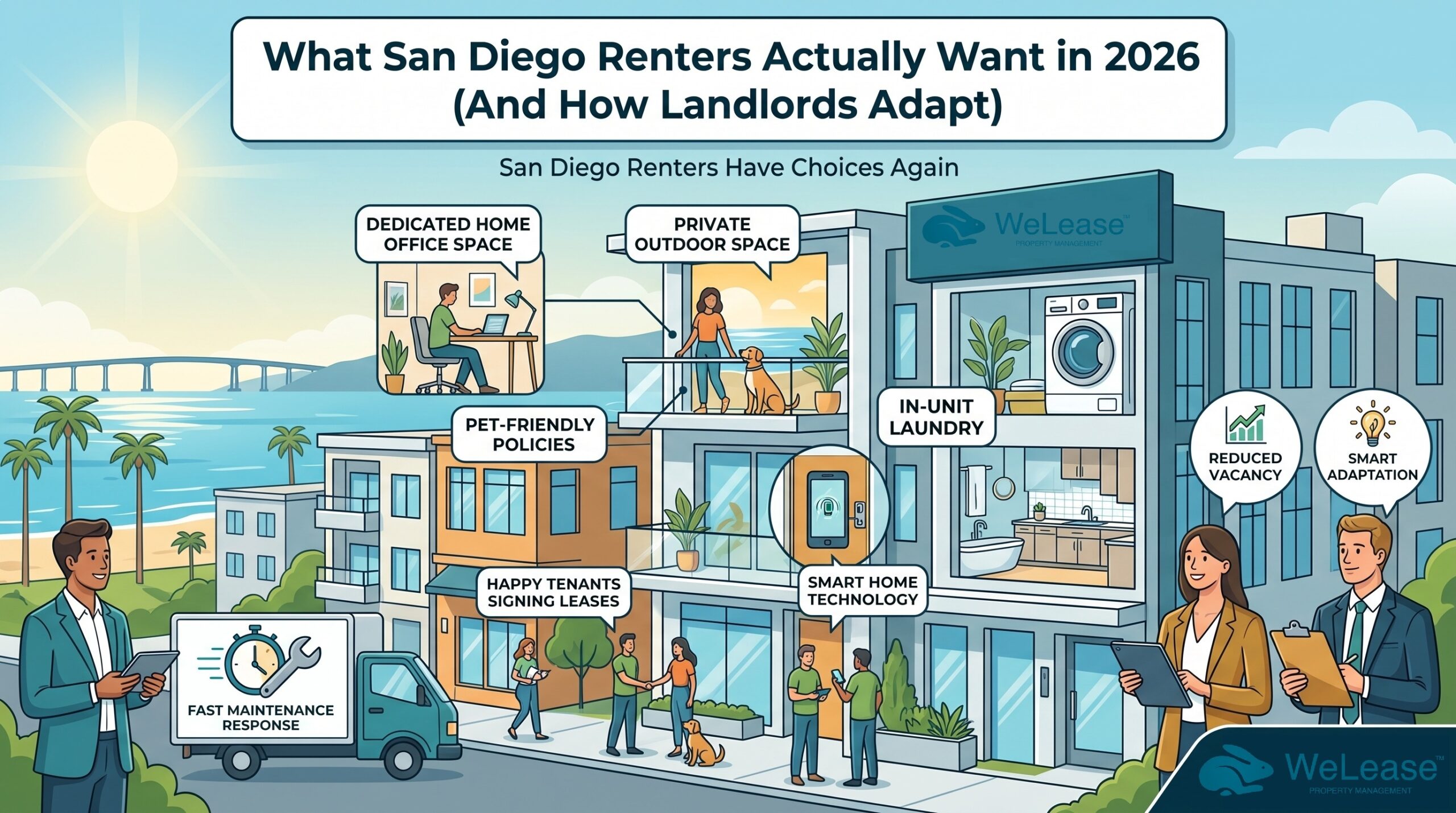
Tenant preferences have shifted in a clear direction, accelerated by the way people now live and work. A few features have moved from “nice to have” to genuine decision drivers.
| Feature | Why Tenants Want It | Landlord Priority |
|---|---|---|
| Dedicated home office space | Remote and hybrid work is permanent for many | High |
| Private outdoor space | Balcony, patio, or yard is a lasting post-2020 priority | High |
| In-unit laundry | One of the most requested features across all renter types | High |
| Smart home technology | Smart locks, thermostats, and modern conveniences | Medium |
| Updated kitchen and bath | Modern finishes signal quality and care | Medium |
| Pet-friendly policies | A large share of renters have pets | High |
| Reliable, fast maintenance | Increasingly a stated expectation, not a bonus | High |
Source: WeLease Team, updated 2026
The through-line is that modern tenants are increasingly seeking properties that offer smart home technology, dedicated home office spaces, and private outdoor areas. Properties that incorporate these features are simply more competitive and can command stronger rents.
Notice that not all of these require major renovation. Some, like pet-friendly policies and fast maintenance, are about how the property is managed rather than what it physically contains.
“The features that actually move leasing speed aren’t the flashy ones, they’re the practical ones. In-unit laundry, a room that works as an office, a clean outdoor space, a clear pet policy. We track how long each unit takes to lease and what tenants ask about most, and it’s the same things over and over. Where owners waste money is on high-end finishes in a mid-market unit. Document what your renters actually ask for, then spend there and nowhere else.”
Yuliana Nogales
What this means for you: The features that drive leasing decisions in 2026 are largely practical: workspace, outdoor access, in-unit laundry, and pet-friendliness. Several are about management, not construction. Focus your attention and budget on the ones that genuinely move a tenant’s decision.
The Home Office Factor: Space Is the New Premium
One of the clearest shifts in tenant demand is the value now placed on space to work from home.
Remote and hybrid work is a permanent feature of the economy for a large share of professionals, and it has changed what people need from a home. A dedicated office, a den, a loft, or simply a layout with room for a real workspace has become a genuine competitive advantage.
This connects to a broader supply dynamic worth understanding. A significant share of recent San Diego construction has focused on studios and one-bedroom units, creating a supply imbalance. Because of that, larger two- and three-bedroom units are frequently outperforming expectations, since they attract renters planning longer stays: families, roommates, and remote professionals who need the extra room to work.
For landlords, this is an unexpected advantage if your property offers space. A two-bedroom where the second room can serve as an office, or a layout with a flexible den, speaks directly to what a large and growing segment of renters wants and is competing for.
What this means for you: If your property offers space, especially a room that can serve as a home office, that is a real competitive advantage in 2026. Larger units are outperforming precisely because remote and hybrid workers need the room. Market that flexibility clearly, because it is exactly what a growing share of renters is searching for.
Outdoor Space and Pet-Friendliness: Two Underrated Advantages
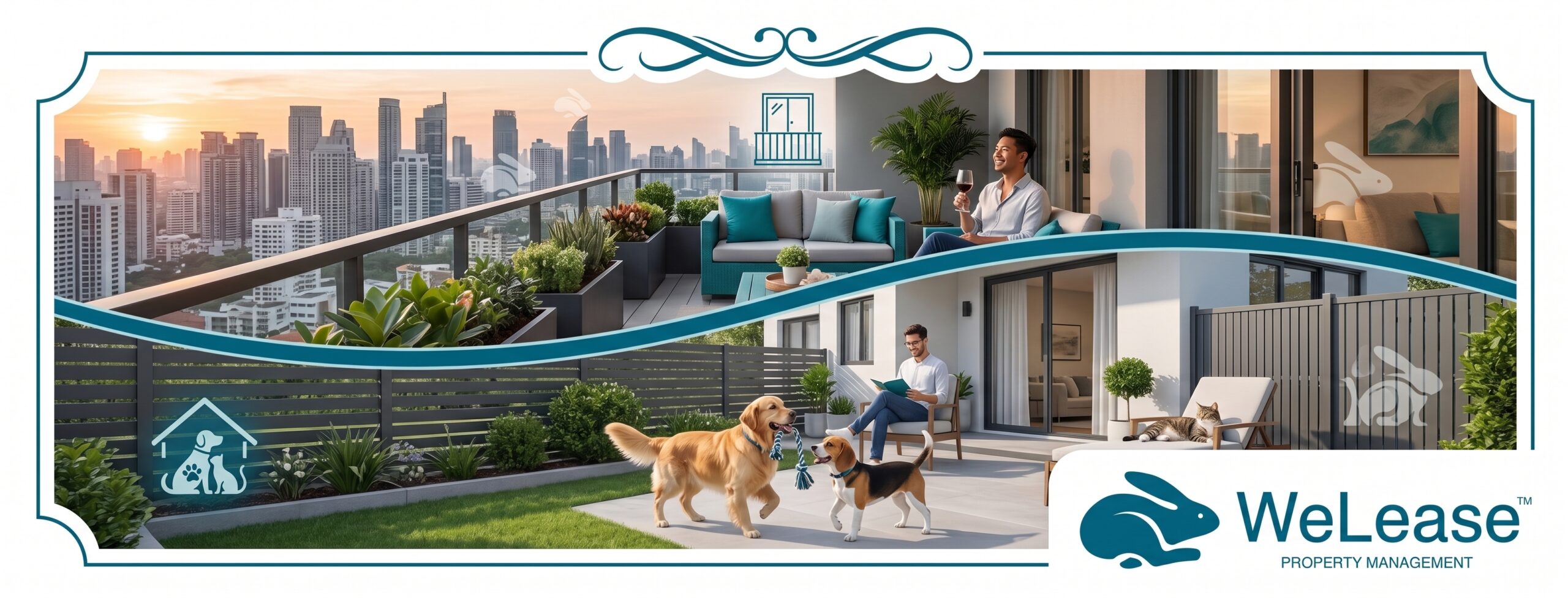
Two features consistently punch above their weight in tenant decisions, and many landlords still underuse them.
Private outdoor space. A balcony, patio, or small yard became a lasting priority after 2020 and has not faded. For renters in a dense city, private outdoor access is a genuine differentiator. If your property has it, it should be front and center in the listing, in the photos, and in the showing. If it has unused potential, a neglected patio or an overgrown yard, modest improvement can meaningfully increase the unit’s appeal.
Pet-friendly policies. A large and growing share of renters have pets, and pet-friendly units draw from a significantly larger applicant pool. Beyond the wider pool, pet owners often stay longer, because moving with pets is harder and finding pet-friendly housing takes effort. A thoughtful, well-structured pet policy, with reasonable deposits or pet rent, can expand your applicant pool and improve retention at the same time.
Take a look at this video to find out what other kind of costly mistakes you can avoid:
This connects to the broader theme that stable, long-term tenants are worth more than top-dollar rent. Pet-friendliness and desirable outdoor space both tend to attract exactly the kind of tenant who stays.
“Pet-friendly and usable outdoor space are two of the most underrated returns in this business. As an investor, I look at it simply: both widen your applicant pool and both keep tenants longer, and longer tenancies are where the money actually is. People with pets don’t move on a whim, it’s too hard to find housing. A reasonable pet policy and a decent patio cost me very little and pay me back in retention. That’s a trade I’ll make every time.”
Yesenia Colestock
What this means for you: Private outdoor space and pet-friendly policies are two of the most underused advantages in San Diego renting. Both expand your applicant pool and support longer tenancies. If your property has outdoor space, feature it prominently. If you can accommodate pets responsibly, doing so widens your market and improves retention.
What Tenants Expect From Management, Not Just the Property
Here is the shift many landlords miss: in 2026, tenant expectations are not only about the physical unit. They are increasingly about the experience of renting.
Where recent new deliveries concentrate, operators are competing not just on finishes but on service: fast maintenance, easy communication, modern conveniences like online rent payment and digital maintenance requests. This has raised tenant expectations across the whole market. A renter who toured a professionally managed new building expects a similar standard of responsiveness wherever they end up.
What tenants now expect from management:
- Fast, reliable maintenance response
- Easy, digital rent payment and maintenance requests
- Clear, professional communication
- Respect for their time during showings, applications, and renewals
None of this requires a physical renovation. It requires systems and consistency. And it is often the deciding factor between a tenant who renews and one who leaves, because it shapes the entire experience of living in the property.
The focus on tenant experience is also being recognized by owners. According to the PM Trends Report 2026, 92% of landlords surveyed said they would be willing to sacrifice some cash flow to ensure a better tenant experience.
This is exactly why maintenance responsiveness is so closely tied to tenant retention. In 2026, the quality of management is itself a feature that tenants evaluate and value.
What this means for you: Tenant expectations in 2026 extend beyond the physical unit to the entire rental experience. Fast maintenance, easy digital payment, and professional communication are now baseline expectations, not extras. This is good news, because improving the management experience is often cheaper and higher-impact than a physical renovation.
How Smart Landlords Are Adapting Without Overspending
The instinct when hearing all this might be to launch an expensive renovation. That is usually the wrong move. The smart approach is targeted, not total.
Prioritize high-impact, lower-cost improvements first. In-unit laundry, a refreshed outdoor space, smart locks, and a modern coat of paint often deliver more leasing impact per dollar than a full gut renovation. Focus on what tenants actually decide on.
Improve the management experience. Fast maintenance, digital payment, and responsive communication cost far less than construction and often matter more to retention. This is frequently the highest-return “upgrade” available.
Market what you already have. Many properties have desirable features, outdoor space, a flexible room, a good location, that are undersold in the listing. Better photos, a clearer description, and a showing that highlights these features can lease a unit faster without spending on improvements at all.
Match improvements to your market. An expensive luxury finish in a mid-market neighborhood may not return its cost, while the same money spent on practical upgrades might. This is the same discipline covered in reading your property’s true ROI: every dollar of improvement should be evaluated against the return it actually produces.
“Before we tell an owner to spend a dollar on upgrades, we look at what that dollar actually returns in their specific market. The highest-return move is almost never a renovation, it’s tightening up the management: fast maintenance, easy online payment, responsive communication. That costs a fraction of a remodel and it’s usually what keeps a good tenant from leaving. Measure the return before you spend, not after.”
Billy Colestock
What this means for you: Adapting to 2026 tenant preferences is about targeting, not spending. Prioritize high-impact, lower-cost improvements, invest in the management experience, market what you already have, and match every improvement to what your specific market will actually pay for. Smart adaptation improves returns. Overspending erodes them.
Talk to Yesenia and Billy

If you are not sure what your property should offer to compete in the 2026 market, or where to spend to lease faster and hold tenants longer, that is exactly the kind of question we help owners answer every day.
At WeLease, we work with San Diego landlords across the county to position properties for the current market: understanding what local renters want, identifying the highest-return improvements, and delivering the management experience that keeps good tenants in place. We help you compete on what matters without overspending on what does not.
If you want a clear read on how your property stacks up against what renters want in 2026, reach out.
www.WeLeaseUSA.com | (619) 876-0753
Key Takeaways
- The San Diego market has shifted from landlord-favored to tenant-favored. With more options, renters choose based on clear preferences, and those preferences now directly drive vacancy, tenant quality, and retention.
- The features tenants want most in 2026 include home office space, private outdoor space, in-unit laundry, pet-friendly policies, smart home technology, and fast, reliable maintenance.
- Remote and hybrid work has made space a premium. Larger units with room for a home office are outperforming, since a large share of new supply focused on studios and one-bedrooms.
- Private outdoor space and pet-friendly policies are two underused advantages. Both expand the applicant pool and support longer tenancies.
- Tenant expectations now extend beyond the physical unit to the management experience: fast maintenance, digital payment, and professional communication are baseline expectations.
- Smart adaptation is targeted, not total. Prioritize high-impact, lower-cost improvements, invest in the management experience, market existing features better, and match every improvement to what the market will pay for.
Frequently Asked Questions
What do renters want most in San Diego in 2026?
The most in-demand features are dedicated home office space, private outdoor space (balcony, patio, or yard), in-unit laundry, pet-friendly policies, and smart home technology. Just as important, tenants now expect a high standard of management: fast maintenance, easy digital rent payment, and professional communication. Units that match these preferences lease faster and retain tenants longer.
How can I make my rental more competitive without a full renovation?
Focus on targeted, high-impact improvements rather than a total overhaul. In-unit laundry, a refreshed outdoor space, smart locks, and fresh paint often deliver strong leasing impact for modest cost. Improving the management experience, fast maintenance and digital payment, is often the highest-return move of all, and it requires systems rather than construction. Marketing your existing features better can also lease a unit faster at no cost.
Are pet-friendly rentals worth it for landlords?
Often yes. A large share of renters have pets, so pet-friendly units draw from a significantly larger applicant pool. Pet owners also tend to stay longer, since pet-friendly housing is harder to find and moving with pets is difficult. A well-structured policy with reasonable pet deposits or pet rent can expand your applicant pool and improve retention at the same time.
Why are larger rental units performing better in San Diego right now?
Because a large share of recent construction focused on studios and one-bedroom units, creating a supply imbalance. Larger two- and three-bedroom units are less common in the new supply and attract renters planning longer stays, including families, roommates, and remote professionals who need space to work from home. This makes larger, space-flexible units an unexpected competitive advantage in 2026.
Do I need to add smart home technology to compete?
It helps but is not essential. Smart locks, smart thermostats, and similar conveniences are increasingly expected, especially in newer and higher-end buildings, and they can differentiate a unit. However, they rank behind practical priorities like home office space, outdoor access, in-unit laundry, and responsive management. Add smart features where they make sense, but prioritize the fundamentals first.
Disclaimer: This article is intended for general informational purposes only and draws on publicly available market data and industry research as of mid-2026. It does not constitute legal, financial, or investment advice. Market conditions and tenant preferences change frequently. For guidance specific to your property, please consult a qualified real estate or property management professional, or contact us at www.weleaseusa.com.
Investor Reality Check: Better Features Don’t Automatically Mean Higher Rent
Tailoring a property to modern renter preferences, like home-office nooks, updated finishes, or smart tech, boosts marketability, but it doesn’t automatically unlock a rent premium. Achievable rent is ultimately dictated by hard market fundamentals: micro-location, square footage, hyper-local comps, available inventory, and broader economic demand.
In a balanced or high-supply market, even a fully modernized property may need strategic pricing or temporary leasing concessions to lock in a tenant quickly. Smart real estate investing isn’t about setting the highest advertised rent on paper; it’s about optimizing the balance between yield, leasing velocity, and vacancy loss to maximize total annual net operating income.
Reviewed by Yesenia Colestock, Co-Founder, WeLease Property Management
Yesenia Colestock is the Co-Founder of WeLease, a locally owned and operated property management company serving landlords and investors throughout San Diego County. She leads WeLease’s day-to-day operations and client relationships, with a focus on delivering responsive, practical property management that protects owners’ investments and keeps tenants satisfied for the long term. Under her leadership, WeLease has been recognized as San Diego’s Best Property Management Company by the San Diego Union-Tribune (Winner 2022, 2024; Finalist 2023, 2025) and named a Top 10 Property Management Company in El Cajon and Chula Vista by Expertise.com in 2026. WeLease Credentials: NARPM® Member, BBB Accredited, MLS Participant, Equal Housing Opportunity. DRE: 02047533.

Ivana M. Janakieva is a Property Management Marketer and SEO Content Manager who turns confusing real estate jargon into practical, actionable advice. She’s the type who reads maintenance reports like morning news and can make lease agreement clauses sound (almost) fun. With years of experience writing about everything from tenant turnover and landlord-tenant laws to climate risks and curb appeal ROI, Ivana creates content for people who want straight answers about protecting and profiting from their most valuable asset, their property.