Chula Vista Rental Market in 2026: What Landlords Actually Need to Know
Home / Chula Vista Rental Market in 2026: What Landlords Actually Need to Know
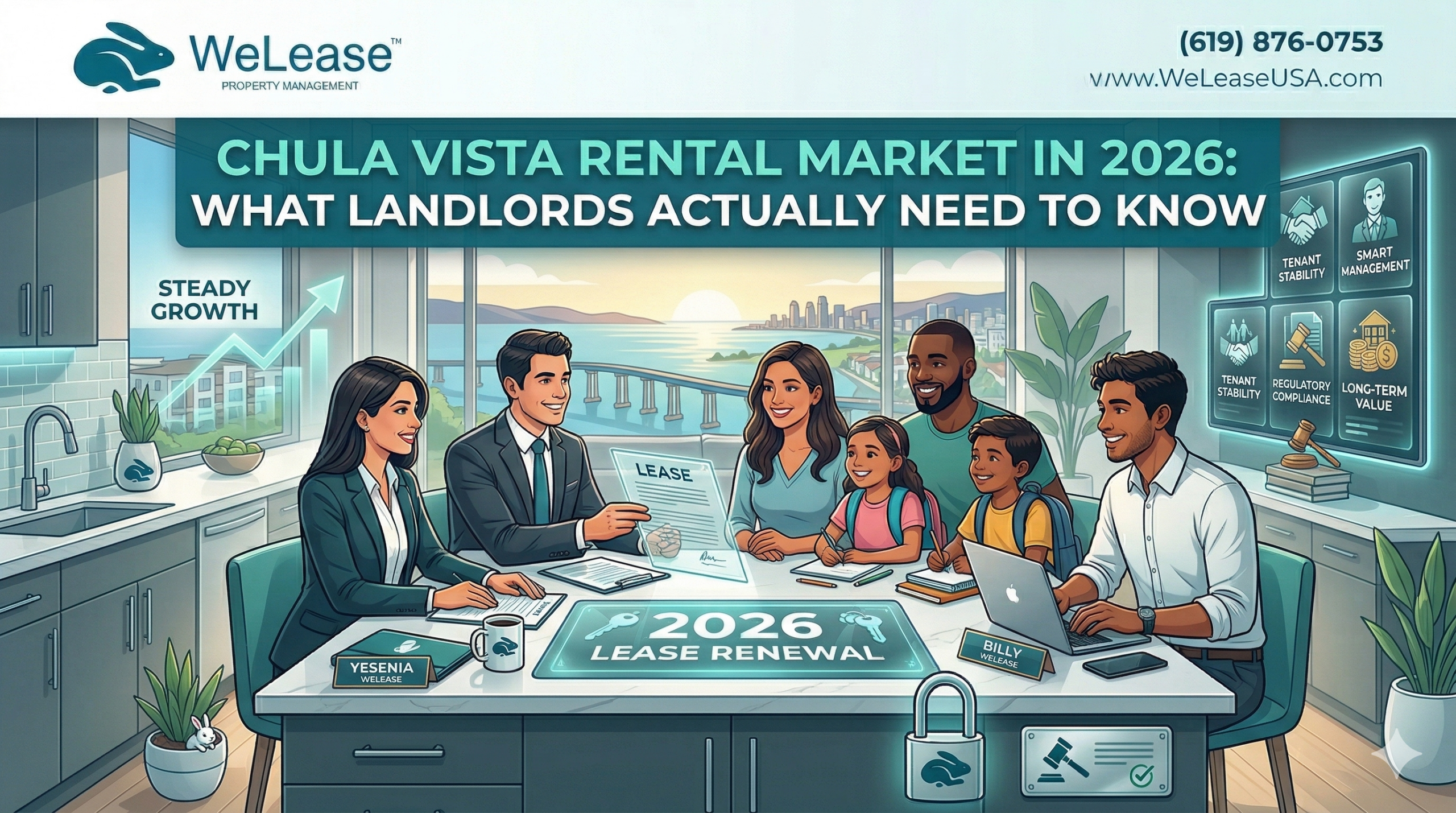
Chula Vista Rental Market in 2026: What Landlords Actually Need to Know
There is a moment every few years when a market stops being overlooked and starts getting taken seriously. Chula Vista is in that moment right now.
For a long time, it was easy to underestimate this part of San Diego County. The rental prices were lower, the headlines were quieter, and investors tended to chase shinier opportunities closer to the coast. But that calculus has been shifting. And in 2026, it is shifting pretty fast.
What is actually happening here is interesting. It is not just that Chula Vista is getting more attention from investors, though it is. It is that the fundamentals driving that attention are the kind that tend to hold up over time, not just spike and fade. Steady demand. Durable tenant relationships. A renter base that genuinely wants to stay put.
For landlords who understand that consistency can outperform excitement, this market is worth a much closer look.
Why Chula Vista Keeps Showing Up on Investor Radar
Affordability pressure across San Diego County is real, and it is pushing renters further from the center. Chula Vista, positioned at the southern edge of the county with easy freeway access and a lot more space per dollar, lands near the top of the list when renters expand their search.
The tenant pool that results from this is genuinely different from what you find in denser, pricier neighborhoods. Families looking for school access and square footage. Professionals who do not need to be downtown five days a week. Long-term renters who have already done the math and decided that stability matters more than proximity.
That mindset produces something valuable: tenants who are less likely to move the moment something shinier comes along. They stay. They communicate. They renew.
And for landlords, that behavioral pattern changes the economics of ownership in meaningful ways. Lower turnover means fewer vacancy gaps. Fewer gaps mean more predictable cash flow. More predictable cash flow means a rental that actually performs the way it was supposed to when you bought it.
None of this is accidental. It is the natural outcome of a market that attracts a specific kind of renter, and one that continues to do so even as the broader county evolves.
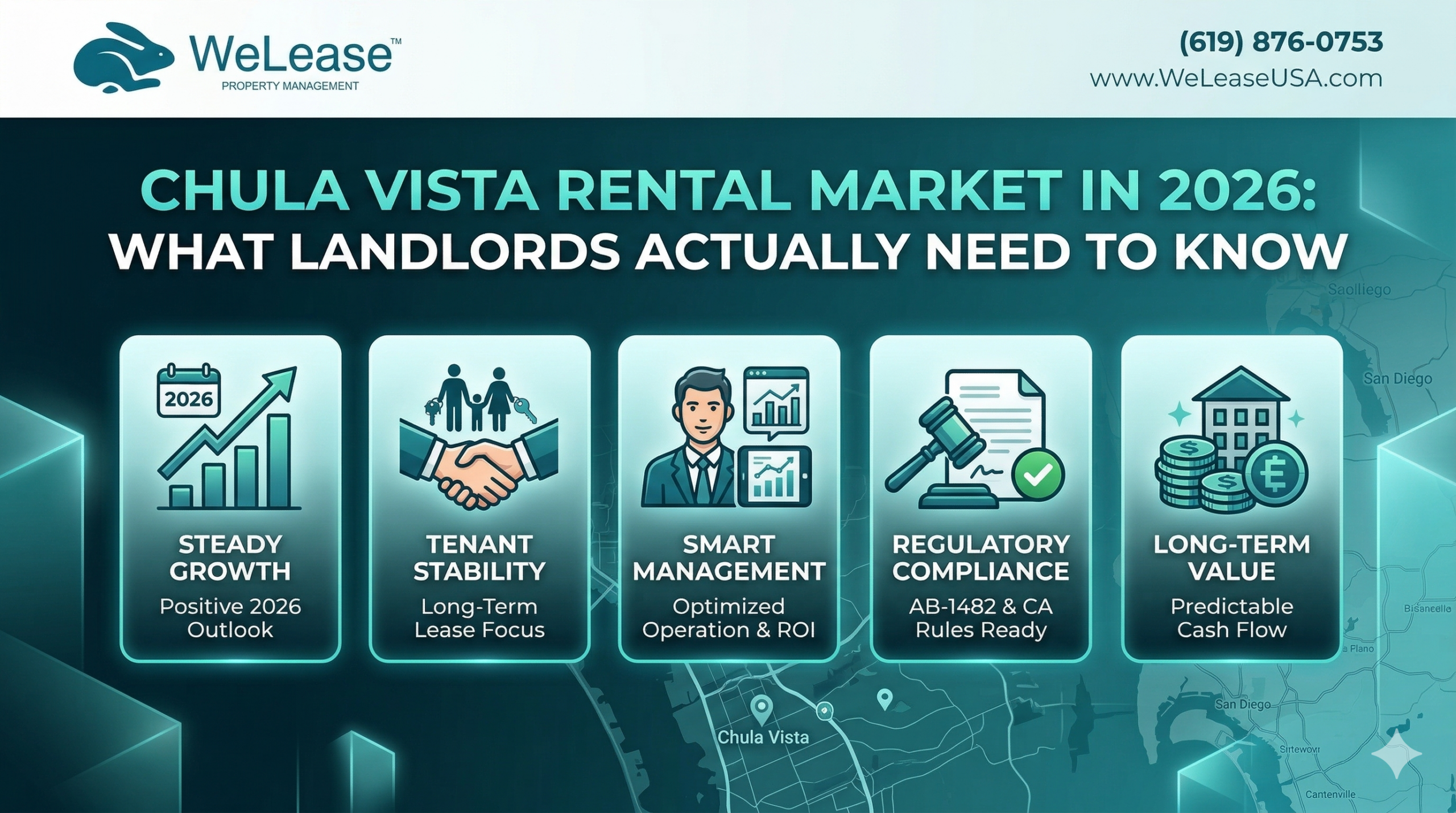
The Affordability Factor Is a Feature, Not a Compromise
Some landlords hear ‘more affordable’ and interpret it as a downside. In Chula Vista, that is a misread.
Value-aligned pricing in this market does not mean cheap. It means the rent reflects the actual condition of the property, the responsiveness of the management, and the realistic expectations of the tenant base. Tenants here are well-informed and budget-conscious. They compare options carefully. And when they find something that genuinely delivers on what it promises, they tend to stay.
This is where a lot of landlords leave money on the table, interestingly. Not by underpricing, but by trying to push rents faster than the market supports. Aggressive increases in a stability-driven area do not create urgency. They create hesitation. And hesitation leads to longer vacancy, which typically costs more than the extra monthly rent would have generated.
The properties that perform best here price thoughtfully, maintain consistently, and increase gradually. That formula is less glamorous than chasing peak rents, but it tends to produce better outcomes over time.
Tenant Stability Is the Real Competitive Advantage
This is probably the most underappreciated thing about the Chula Vista rental market, and it is worth spending a moment on.
High-turnover markets get a lot of attention because they generate activity. New listings, new tenants, new leases. But activity is not performance. The costs of turnover, vacancy days, cleaning, repairs, leasing fees, administrative time, add up faster than most landlords expect. A tenant who stays for three or four years at a slightly lower rent often delivers significantly better returns than one who leaves every twelve months.
Chula Vista produces the former more reliably than most parts of the county. Tenants here tend to stay multiple lease cycles when the landlord holds up their end of the relationship. They communicate before they leave rather than disappearing. They expect reasonable responsiveness and, when they get it, they reciprocate with consistency.
Landlords who lean into this dynamic, maintaining properties well, responding promptly, communicating clearly at renewal time, often find that their occupancy rates quietly outperform expectations. A good property manager focused on Chula Vista operations understands this rhythm and builds systems around it.
What Actually Drives Vacancy in Chula Vista
Vacancy in this market is rarely random. It is almost always traceable.
The most common triggers are familiar: rent increases that arrive without context, maintenance issues that take too long to resolve, renewal communications that feel transactional or arrive too late. Tenants in Chula Vista are patient, but they are not passive. When small frictions accumulate without resolution, they eventually decide to look elsewhere.
The good news is that most of these triggers are avoidable. Tenants rarely leave without signals. Slower responses to requests. Less engagement during renewals. A general sense that the landlord or management team is not really paying attention. When those signals are caught early and addressed, retention improves considerably.
This is one of the areas where working with an experienced property management team pays off most clearly. Not just because of the systems they bring, but because they are paying attention to these dynamics in real time, across multiple properties, and they can identify what is working and what is starting to slip before it becomes expensive.
How Chula Vista Compares to Other San Diego Markets
Chula Vista is not trying to compete with coastal San Diego on rent levels or prestige. That is not its value proposition, and landlords who understand this position it correctly.
Compared to more central or coastal San Diego markets, Chula Vista typically offers lower entry costs, lower tenant turnover, higher price sensitivity, and more durable occupancy. It is not a market that spikes dramatically. But it also does not crater. The consistency is the point.
There are neighborhoods in other parts of San Diego County that attract high rents for a year or two and then see demand soften as new supply arrives or economic conditions shift. Chula Vista’s performance tends to be less exciting on the upside and more reliable across the cycle. For investors who prioritize long-term cash flow over short-term appreciation plays, that trade-off often looks better in hindsight than it does at first glance.
Carlsbad, for example, attracts a similar type of stability-focused tenant in its more established residential neighborhoods. Different price point, similar behavioral pattern. The common thread is a renter base that has made a deliberate choice to be there, and that tends to stick.
The Role of Property Management in a Stability-Driven Market
In a high-turnover market, property management is mostly reactive: fill the vacancy, manage the transition, repeat. In a market like Chula Vista, the role shifts. It becomes more about protecting and extending what is already working.
Because tenants stay longer here, the small operational decisions compound more. A maintenance issue that gets ignored does not just cost the repair fee; over two or three years, it can quietly erode the tenant relationship until renewal becomes a coin flip. Clear lease documentation, structured renewal conversations, proactive inspections, these are the things that determine whether a three-year tenancy becomes a five-year one.
Chula Vista property management that understands this dynamic builds around consistency rather than speed. The goal is not to turn units over faster. The goal is to not have to turn them over at all.
For landlords who are self-managing and feeling the weight of that, or for investors who want to make sure their Chula Vista asset is being positioned for long-term performance, this is probably a good time to have a conversation about what a professional management structure would actually look like.
Regulations, Rent Caps, and Staying Compliant
Chula Vista falls under California landlord laws, and a few of them carry real consequence if missed.
AB-1482 applies to many properties in the area and caps annual rent increases for covered units. Just-cause eviction requirements affect how tenants can be asked to leave and what documentation is needed. Notice timelines for various landlord actions are stricter than many owners realize, particularly those who manage properties in multiple states.
None of this is unmanageable. But it does require attention, and the cost of getting it wrong tends to be disproportionate to the oversight. An eviction that gets procedurally challenged because of a notice error, for example, can extend a problem by months and add significant legal cost.
Staying current on California’s evolving rental regulations is one of the more straightforward reasons to work with a property management team that is active in this market. They are tracking these changes as a core part of the job, and the compliance piece tends to take care of itself as a result.
The Long-Term Outlook for Chula Vista Rentals
Looking at where Chula Vista is headed, it is hard to find a compelling reason to be pessimistic about the fundamentals.
Population growth in the South Bay continues. Infrastructure investment in the area is ongoing. Affordability pressure from the rest of the county keeps pushing qualified renters toward Chula Vista, and the relative value of the market compared to coastal alternatives is likely to hold for the foreseeable future.
The market is not going to deliver dramatic short-term appreciation. That is just not what it does. But for landlords with a patient, long-term orientation, the picture is genuinely encouraging. Occupancy tends to hold. Tenant quality tends to be solid. And when properties are managed well, the returns are consistent enough to build meaningful equity over time.
There is real opportunity here, and a lot of it is still being missed by investors who overlook Chula Vista in favor of flashier options. That gap is starting to close.
Talk to Yesenia and Billy

Chula Vista pricing can look straightforward on the surface. But long-term performance usually depends on more than just rent comparisons.
Yesenia and Billy work with San Diego property owners every day to evaluate tenant behavior patterns, renewal timing, maintenance history, local demand shifts, and long-term positioning. If you are not sure whether your Chula Vista rental is set up for consistent performance, or if you are considering investing in the area and want a realistic picture of what to expect, a conversation with the WeLease team is a good place to start.
We would be glad to walk through your specific situation and help you figure out what the right approach looks like, whether that means taking on management, adjusting your current strategy, or just getting a clearer read on where the market is heading.
www.WeLeaseUSA.com | (619) 876-0753
Disclaimer
This article is intended for general informational purposes only and reflects observed trends within the Chula Vista rental market. It does not constitute legal, financial, or tax advice. Market conditions, laws, and regulations change frequently. For property-specific guidance, please consult a qualified California real estate professional, licensed legal advisor or contact us at www.weleaseusa.com.
Key Takeaways
- Chula Vista’s rental market is growing steadily and attracting stable, long-term tenants in 2026.
- Affordability relative to coastal San Diego continues to drive consistent rental demand in the area.
- Tenant stability, not rent growth, is the primary performance driver for landlords here.
- Vacancy is almost always avoidable and is typically caused by pricing, maintenance, or communication gaps.
- AB-1482 and California just-cause eviction rules apply and require careful compliance.
- Professional property management helps protect long-term performance in a stability-driven market.
- Long-term cash flow, lower turnover, and predictable occupancy make Chula Vista a compelling hold.
Frequently Asked Questions
Is Chula Vista a good rental market in 2026?
Yes, genuinely. It offers steady demand, relative affordability, and a tenant base that tends to prioritize stability. For landlords focused on consistent long-term performance rather than short-term spikes, it checks a lot of the right boxes.
Are rents in Chula Vista increasing?
Gradually and steadily. Rent growth here tends to be moderate rather than aggressive, which is actually part of what supports longer tenancies. Properties that price thoughtfully and increase incrementally tend to outperform those chasing market peaks.
What kind of tenants rent in Chula Vista?
Primarily families, professionals, and long-term renters who are looking for space, value, and stability. This is not a high-churn renter demographic. These are people who have made an intentional choice to be in the area and tend to stay when the landlord holds up their end of the relationship.
Is vacancy a concern in Chula Vista rentals?
Vacancy risk is moderate and largely self-inflicted. The most common causes are abrupt rent increases, deferred maintenance, and slow communication during renewals. When those things are handled well, retention rates in Chula Vista tend to be quite strong.
Do I need property management for a Chula Vista rental?
Not required, but often worth it. In a stability-driven market, the operational details, lease renewals, maintenance scheduling, compliance, compound over time in ways that are easy to underestimate. A good property management team focused on Chula Vista operations can have a meaningful impact on long-term performance.
Reviewed by Billy Colestock Co-Founder & Executive Officer, WeLease REALTOR® | DRE# 01771188: Billy Colestock brings over 20 years of experience in real estate to his leadership role at WeLease Property Management. As a licensed REALTOR® and Co-Founder of WeLease, he is a trusted voice in the San Diego real estate community and frequently leads educational sessions at the San Diego Association of REALTORS® (SDAR), covering key topics such as evictions, tenant screening, maintenance, and housing regulations. Billy is also a member of the National Association of REALTORS®, California Association of REALTORS®, and serves as President of his HOA. His depth of expertise ensures WeLease remains proactive, compliant, and highly effective in serving homeowners and investors throughout Southern California | WeLease Credentials: NARPM® Member, BBB Accredited, MLS Participant, Equal Housing Opportunity. Recognized as San Diego’s Best Property Management Company – Union-Tribune Winner (2022, 2024); Finalist (2023, 2025). DRE: 02047533

Ivana M. Janakieva is a Property Management Marketer and SEO Content Manager who turns confusing real estate jargon into practical, actionable advice. She’s the type who reads maintenance reports like morning news and can make lease agreement clauses sound (almost) fun. With years of experience writing about everything from tenant turnover and landlord-tenant laws to climate risks and curb appeal ROI, Ivana creates content for people who want straight answers about protecting and profiting from their most valuable asset, their property.