Allied Gardens Rental Market: What Landlords Should Know Before Pricing
Home / Allied Gardens Rental Market: What Landlords Should Know Before Pricing
Allied Gardens Rental Market: What Landlords Should Know Before Pricing
Allied Gardens doesn’t usually make the “hot neighborhood” headlines. And honestly, that’s part of the appeal.
For San Diego landlords, pricing a rental in Allied Gardens is less about chasing spikes and more about understanding stability. This is a neighborhood where small pricing mistakes linger longer, but thoughtful decisions tend to pay off quietly over time.
If you’re preparing to set rent here, the Allied Gardens rental market asks a different set of questions than coastal or downtown areas. Demand is steady, expectations are practical, and tenants tend to stay when things feel fair and predictable.
That sounds simple. It rarely is.
Understanding the Allied Gardens Rental Market
Allied Gardens sits in an interesting middle ground within San Diego rental neighborhoods. It’s close enough to major corridors like Mission Valley and SDSU to stay convenient, but far enough removed to feel residential and settled.
Most renters here are not testing the market for the “best deal.” They’re testing the neighborhood for fit.
The tenant pool often includes:
- Long-term renters priced out of buying nearby
- Small families prioritizing schools and quiet streets
- Professionals working in central San Diego who want predictability
- Retirees downsizing but staying local
This mix creates consistency, but it also means pricing is scrutinized closely. Tenants here compare value carefully. They notice when rent jumps feel disconnected from condition or amenities.
That’s why rent pricing in Allied Gardens San Diego works best when it’s grounded in reality, not optimism.
Why Pricing Too Aggressively Backfires Here
In faster-moving markets, landlords sometimes get away with “testing” a higher price and adjusting later. Allied Gardens is less forgiving.
When rent is set above perceived value:
- Showings slow down quickly
- Applicants become more selective and less flexible
- Vacancy stretches quietly, not dramatically
- Price reductions feel more noticeable
That doesn’t mean Allied Gardens is cheap. It means expectations are clear.
Tenants here aren’t looking for luxury. They’re looking for homes that feel well-kept, calm, and fair. Pricing that reflects that mindset tends to attract longer stays and fewer issues.
This connects closely with how long-term tenants stabilize rental income over time, something many landlords underestimate when focusing only on top-line rent.
The Cost of Vacancy, in Real Numbers
One thing that often changes the pricing conversation is looking at vacancy as a daily cost, not an abstract risk.

Billy often explains it this way to owners:
“If a property would normally rent for $3,000 per month, every day it sits vacant costs about $100 in lost rent. That means just 12 days of vacancy is the same as lowering the rent by $100 per month for an entire year.”
That math surprises a lot of owners.
In practice, what usually happens when landlords chase the absolute top of the market isn’t a clean, one-week delay. It’s a slower slide. A few weeks of “let’s wait and see.” Another round of showings. Then a price adjustment that comes later than it should have.
In a neighborhood like Allied Gardens, where demand is steady but not frantic, those extra weeks quietly eat into annual income.
This is why WeLease tends to price for market fit rather than peak pricing. A slightly lower rent that fills quickly and keeps a good tenant often outperforms a higher rent that creates even short gaps. Over a year, the numbers usually favor stability.
Vacancy doesn’t announce itself loudly here. It just shows up on the year-end statement.
Why this works specifically in Allied Gardens
Allied Gardens tenants tend to be informed and patient. If a price feels stretched, many will simply wait or look one street over rather than negotiate aggressively. That means pricing too high doesn’t always trigger fast feedback. It triggers silence.
That silence is where revenue slips.
Thinking in terms of dollars lost per day, instead of just monthly rent, helps keep pricing decisions grounded and responsive. Especially in a neighborhood where long-term occupancy is the real advantage.
What Actually Supports Higher Rent in Allied Gardens
Raising rent successfully in Allied Gardens usually has less to do with the market and more to do with the property itself.
Things that genuinely move the needle:
- Clean, updated interiors even if modest
- Reliable systems. HVAC, plumbing, electrical
- Clear maintenance standards and response times
- Private outdoor space or usable storage
- Parking that’s simple, not complicated
Things that matter less than expected:
- Trendy finishes
- Over-designed upgrades
- Trying to mirror pricing from nearby “hot” neighborhoods
This is where Allied Gardens property management considerations come into play. Not because management magically raises rent, but because execution matters more here.
When systems are tight and communication is clear, tenants stay. When they stay, pricing becomes easier to defend.
Comparing Allied Gardens to Nearby Neighborhoods
Landlords sometimes price Allied Gardens rentals as if they’re competing directly with places like Mission Valley, Kensington, or even parts of North Park.
That’s usually a mistake.
Tenants choosing Allied Gardens are opting out of density and nightlife. They’re choosing quiet streets and routine. That means comparisons should stay realistic and local.
This distinction comes up often when discussing why some San Diego neighborhoods attract different tenant profiles, even when they’re only minutes apart.
Allied Gardens isn’t trying to be something else. It works best when priced like itself.
Vacancy Risk Is Low, But Not Zero
One of the strengths of the Allied Gardens rental market is low volatility. Vacancies happen, but they tend to happen for predictable reasons:
- Rent jumps that feel abrupt
- Deferred maintenance catching up
- Poor communication during renewals
Unlike more transient areas, tenants here will usually give signals before leaving. Questions change. Maintenance complaints pile up. Renewal conversations feel tense.
Owners who pay attention early can often adjust before losing a good tenant. Those who don’t often end up relearning why ignoring small issues becomes expensive later, a theme that shows up across many San Diego markets.
Pricing With Regulations in Mind
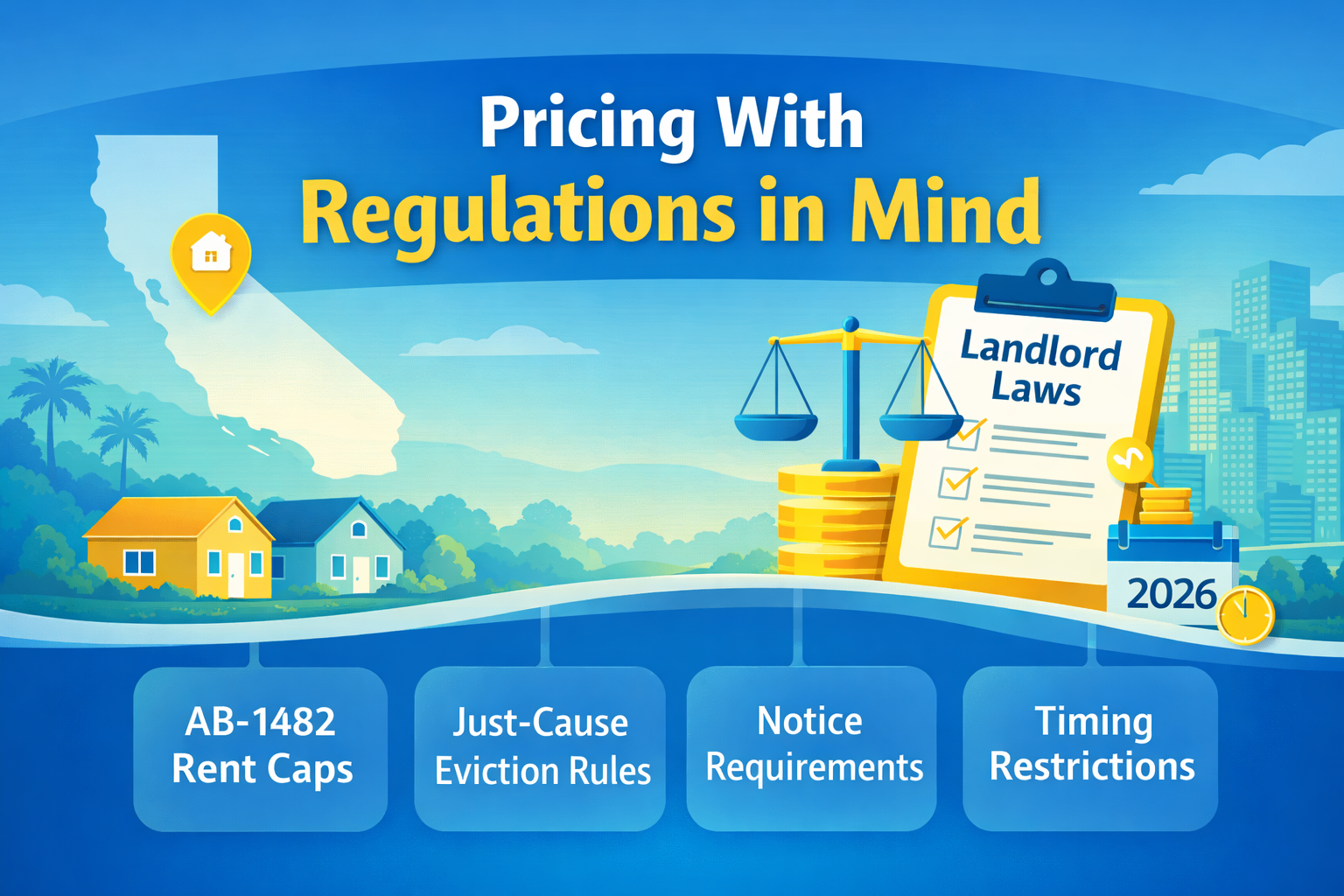
While Allied Gardens itself doesn’t carry unique neighborhood-specific ordinances, it still falls under the broader web of San Diego landlord laws and state regulations.
That means pricing decisions should always account for:
- AB-1482 rent caps where applicable
- Just-cause eviction rules
- Notice requirements for increases
- Timing restrictions
Landlords sometimes focus on “what the market will bear” without factoring in what the law allows over time. That gap creates frustration later.
This is why understanding how rent control impacts San Diego rentals year over year matters even in neighborhoods that feel quiet and uncomplicated.
When Professional Management Actually Helps Here
Allied Gardens is one of those neighborhoods where self-managing can work. Until it doesn’t.
The issues that trip owners up are rarely dramatic. They’re administrative:
- Late responses that frustrate otherwise good tenants
- Inconsistent maintenance follow-through
- Poor documentation during renewals or move-outs
This is where experienced teams familiar with professional property management in San Diego tend to add value quietly. Not by pushing rent higher, but by protecting consistency.
In neighborhoods like Allied Gardens, consistency is the asset.
The Long View on Allied Gardens Rentals
Allied Gardens doesn’t offer fireworks. It offers reliability.
For landlords thinking beyond the next lease cycle, that matters. Pricing correctly today supports:
- Longer average tenancy
- Lower turnover costs
- More predictable cash flow
- Less regulatory stress
It’s not flashy. It’s durable.
That’s also why Allied Gardens often shows up in conversations about which San Diego rental neighborhoods quietly outperform over time, even when they’re not dominating headlines.
Final Thoughts on Pricing Allied Gardens Rentals
If there’s one takeaway, it’s this: pricing in Allied Gardens works best when it’s thoughtful, not aggressive.
Owners who treat this neighborhood like a long-term holding tend to do well. Owners who chase top-dollar without context usually learn the hard way that stability has its own rules.
At WeLease, we’ve seen this pattern repeat often enough to trust it. When pricing reflects condition, communication, and tenant expectations, Allied Gardens does what it’s always done.
It stays steady.
And in a market that keeps changing, that’s worth more than it sounds.
Talk to Yesenia & Billy

Pricing a rental in Allied Gardens often looks simple on paper. In practice, it’s rarely just about the number.
Yesenia and Billy work closely with San Diego owners to look beyond surface comps. That means factoring in tenant behavior, maintenance history, local turnover patterns, and how pricing decisions today affect stability six or twelve months from now.
If you’re unsure whether your price reflects the market or just recent listings, a quick conversation can help clarify the difference. Sometimes the smartest move isn’t raising rent. It’s adjusting expectations before small issues become costly ones.
Disclaimer: This article is intended for general informational purposes only and reflects common trends and observations in the Allied Gardens rental market. It should not be considered legal, financial, or tax advice.
Rental laws, local regulations, and market conditions change frequently, and individual properties may be subject to different rules or restrictions. For guidance specific to your property, situation, or compliance obligations, consult a qualified California attorney.
Key Takeaways
- Allied Gardens pricing works best when stability is prioritized over squeezing the top dollar.
- Tenant demand here favors longer stays, not rapid turnover.
- Small pricing missteps can quietly increase vacancy more than owners expect.
- Comparing Allied Gardens to nearby neighborhoods without context often leads to under- or overpricing.
- Strong systems and local oversight matter more here than aggressive rent growth.
FAQs
Is Allied Gardens considered a high-demand rental neighborhood?
A: Yes, but demand is steady rather than flashy. Renters tend to value consistency, space, and neighborhood feel over trend-driven amenities.
How often do rents increase in Allied Gardens?
A: Most successful landlords see gradual increases tied to lease renewals, not sharp annual jumps. Stability usually wins long term.
Are Allied Gardens rentals more family-oriented?
A: Often, yes. Many tenants are long-term renters who plan to stay multiple years, which affects pricing strategy and maintenance expectations.
How does Allied Gardens compare to nearby neighborhoods for rent pricing?
A: Pricing usually lands below trendier areas, but turnover is lower. Net income can be stronger even with slightly lower rents.
Is professional property management necessary in Allied Gardens?
A: Not mandatory, but helpful. The neighborhood rewards consistent maintenance, fast communication, and predictable operations.
Reviewed by Billy Colestock Co-Founder & Executive Officer, WeLease REALTOR® | DRE# 01771188: Billy Colestock brings over 20 years of experience in real estate to his leadership role at WeLease Property Management. As a licensed REALTOR® and Co-Founder of WeLease, he is a trusted voice in the San Diego real estate community and frequently leads educational sessions at the San Diego Association of REALTORS® (SDAR), covering key topics such as evictions, tenant screening, maintenance, and housing regulations. Billy is also a member of the National Association of REALTORS®, California Association of REALTORS®, and serves as President of his HOA. His depth of expertise ensures WeLease remains proactive, compliant, and highly effective in serving homeowners and investors throughout Southern California | WeLease Credentials: NARPM® Member, BBB Accredited, MLS Participant, Equal Housing Opportunity. Recognized as San Diego’s Best Property Management Company – Union-Tribune Winner (2022, 2024); Finalist (2023, 2025). DRE: 02047533

Ivana M. Janakieva is a Property Management Marketer and SEO Content Manager who turns confusing real estate jargon into practical, actionable advice. She’s the type who reads maintenance reports like morning news and can make lease agreement clauses sound (almost) fun. With years of experience writing about everything from tenant turnover and landlord-tenant laws to climate risks and curb appeal ROI, Ivana creates content for people who want straight answers about protecting and profiting from their most valuable asset, their property.