Tenant Quality vs. Tenant Speed: Why Rushing Costs More
Home / Tenant Quality vs. Tenant Speed: Why Rushing Costs More
Tenant Quality vs. Tenant Speed: Why Rushing Costs More
Every landlord knows the feeling.
A unit goes vacant. Days tick by. The listing sits there, mocking you. Showings slow to a trickle, and suddenly that nagging voice in your head gets louder: “Just get someone in there.”
It’s a natural instinct. Vacancy hurts. Empty units don’t pay mortgages. But what most property owners learn the hard way is this: rushing to fill a rental usually costs way more than the vacancy ever would have.
The real question isn’t whether you can afford to wait. It’s whether you can afford not to.
Why Speed Feels So Urgent (Even When It Shouldn’t Be)
Vacancy creates this weird psychological pressure. Every empty day feels like money evaporating. You start checking the listing obsessively. Why isn’t anyone applying? Is the rent too high? Should I drop the price?
Then someone applies. Their credit score is… okay. Income is a little tight but technically qualifies. References are sparse, but they seem nice enough in the email.
And you think: good enough.
That’s usually when the trouble starts. Not immediately, of course.
This is a trade off most property managers, including theearnesthomes.com, have to think about carefully. A landlord panics during vacancy, cuts corners on tenant screening San Diego requires, and six months later they’re dealing with late payments, damage disputes, or an early lease break. The very thing they were trying to avoid (lost rent) ends up happening anyway, just with extra steps and more headaches.
The Hidden Math of “Good Enough” Tenants
Here’s what a rushed placement actually costs:
A tenant who seems fine at first but starts paying late by month three. Now you’re spending time on reminders, late fees, and payment plans. Maybe they catch up, maybe they don’t. Either way, your time isn’t free.
Or they treat the place like a temporary stop. Minimal care. Reactive maintenance requests that could’ve been prevented. Communication that feels more like negotiation than cooperation.
Then at renewal time? They’re gone. And you’re right back where you started, except now you need to repaint, deep clean, maybe replace some things that got neglected.
One study found that tenant turnover costs landlords an average of $1,000 to $5,000 per vacancy when you factor in lost rent, marketing, repairs, and administrative time. And in markets like San Diego where regulations keep tightening, rental vacancy costs can climb even higher.
So that month of vacancy you were trying to avoid? You just traded it for three months of problems and another vacancy anyway.
The rental vacancy costs keep piling up: cleaning, repairs, lost rent during turnover, marketing fees. All because speed felt more important than scrutiny.
What “Quality” Actually Means (It’s Not What You Think)
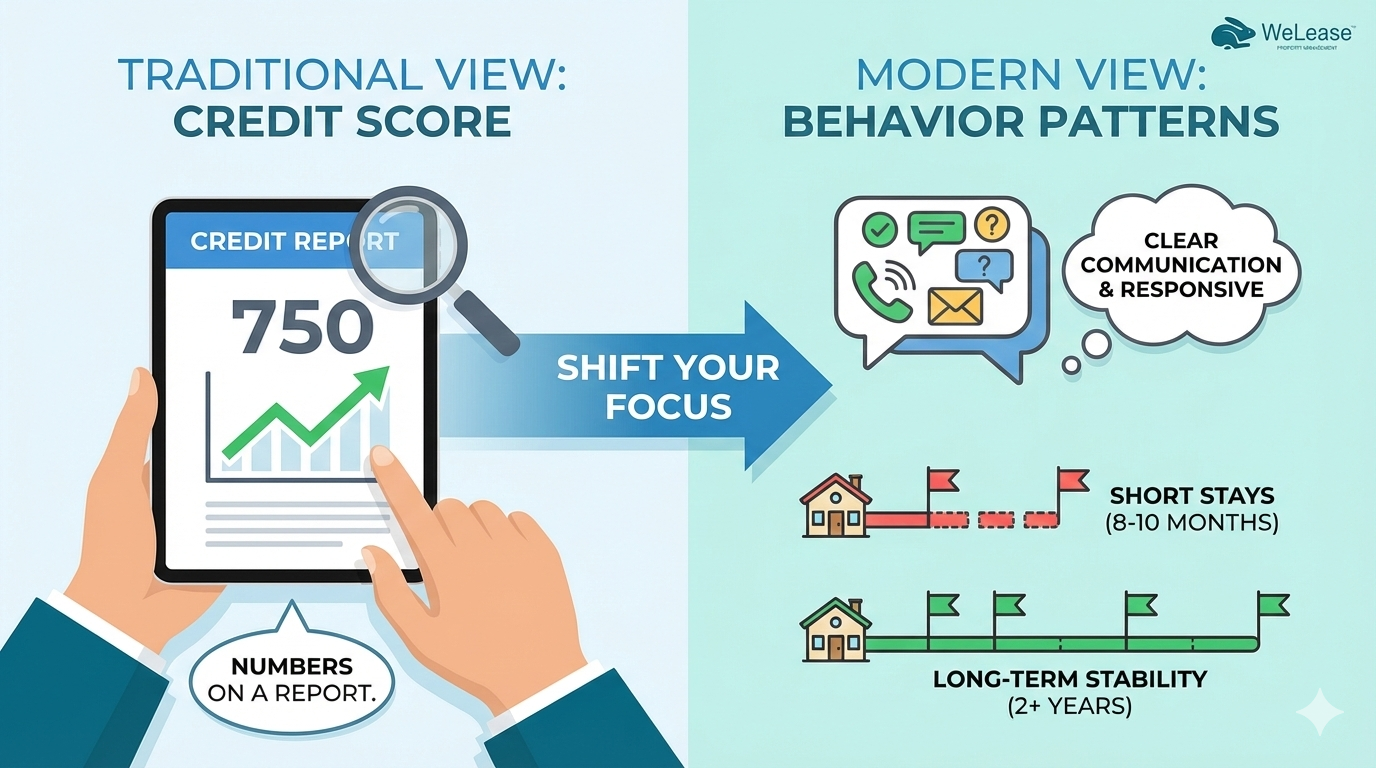
Most landlords default to credit scores when evaluating tenants. And sure, credit matters. But quality isn’t really about numbers on a report.
It’s about behavior patterns.
How does someone communicate? Are they clear and responsive, or do you have to chase them down for basic information? Do they ask thoughtful questions about the property, or are they vague and evasive?
What does their rental history look like? Not just whether they paid rent, but how long they stayed. Someone who moves every 8 to 10 months isn’t necessarily a bad person. They’re just probably not looking for stability, which means you’re not either.
Professional property managers spend a lot of time on these signals during tenant screening San Diego landlords often rush through. They’ve learned that someone with a 680 credit score who communicates well and has a stable two year rental history often outperforms someone with a 750 who seems flaky or difficult during the application process.
Credentials get you in the door. Behavior keeps you there.
The Compounding Cost of Instability
Here’s where it gets expensive in ways that don’t show up on a spreadsheet.
Fast placements create more work. Not at first, but over time.
Tenants who weren’t properly screened tend to:
- Push boundaries early and often
- Turn small maintenance issues into dramatic emergencies
- Question every charge or policy
- Leave at the first opportunity
Which means you’re spending more time:
- Answering emails and calls
- Coordinating repairs
- Explaining things that should’ve been clear from the start
- Managing conflicts that never needed to happen
This is why some landlords eventually throw up their hands and hire property managers. Not because managing property is inherently hard, but because managing the wrong tenants is exhausting.
And without solid tenant retention strategies in place, you end up in this constant cycle of turnover and stress.
When Slowing Down Actually Makes You Money
The irony? Taking your time often fills units faster. Or at least better.
A well priced listing with clear standards attracts fewer applicants, but stronger ones. People who are actually looking for what you’re offering tend to be more decisive and easier to work with.
Setting clear expectations up front (about maintenance, communication, policies) filters out people who aren’t a good fit. That’s not being picky. That’s being smart.
And here’s the part that really matters: a tenant who stays three years at slightly below market rent almost always outperforms someone who pays top dollar for one year before leaving.
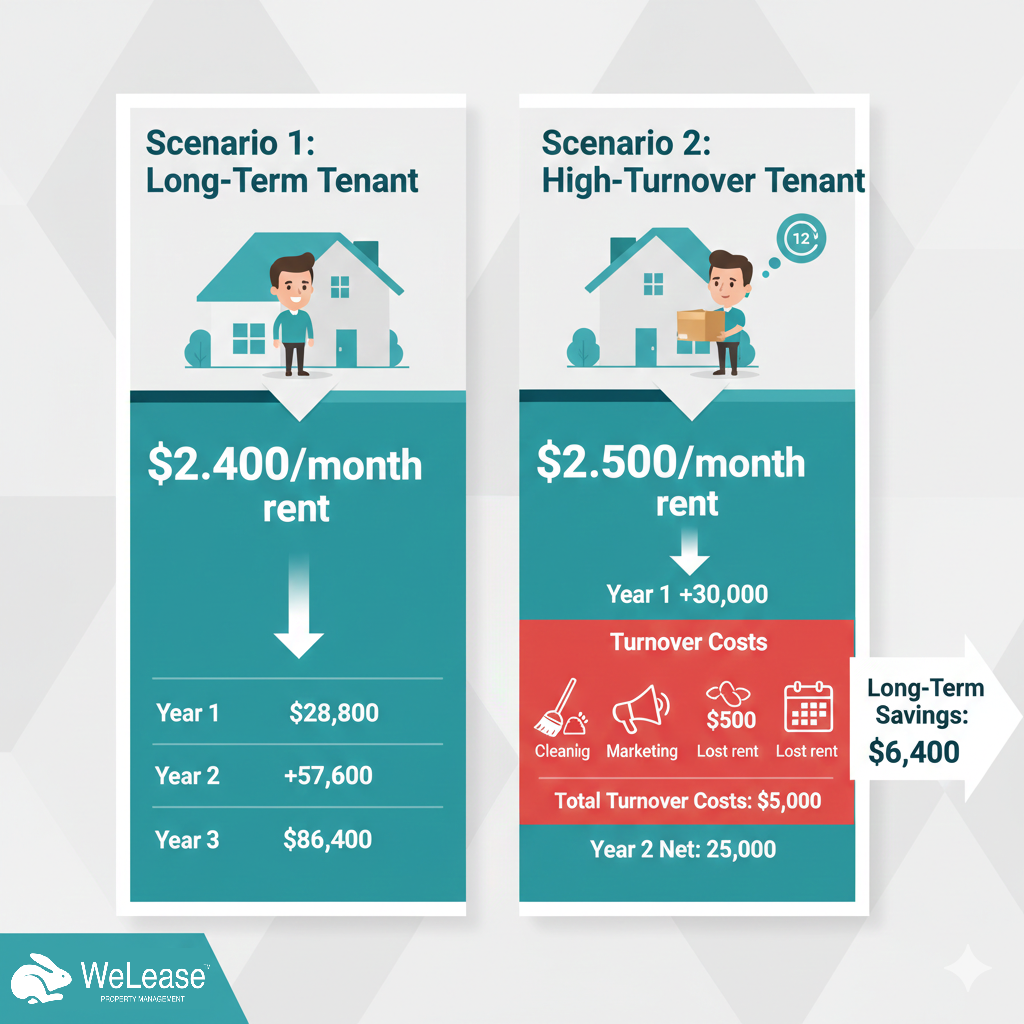
The math is simple. Say you get $2,400/month with a great long term tenant, versus $2,500/month with someone who leaves after a year.
Year one: you’re down $1,200 in rent. Not great.
But at the end of year one, tenant two moves out. You lose a month to turnover, spend $2,000 on repairs and cleaning, and another $500 on marketing. Those rental vacancy costs add up fast. Now you’re down $5,700.
Meanwhile, tenant one is still there. Paying on time. Not causing problems. Planning to renew again.
Over three years, that $100/month difference becomes completely irrelevant compared to the stability and lower overhead.
Tenant Retention Strategies That Actually Work
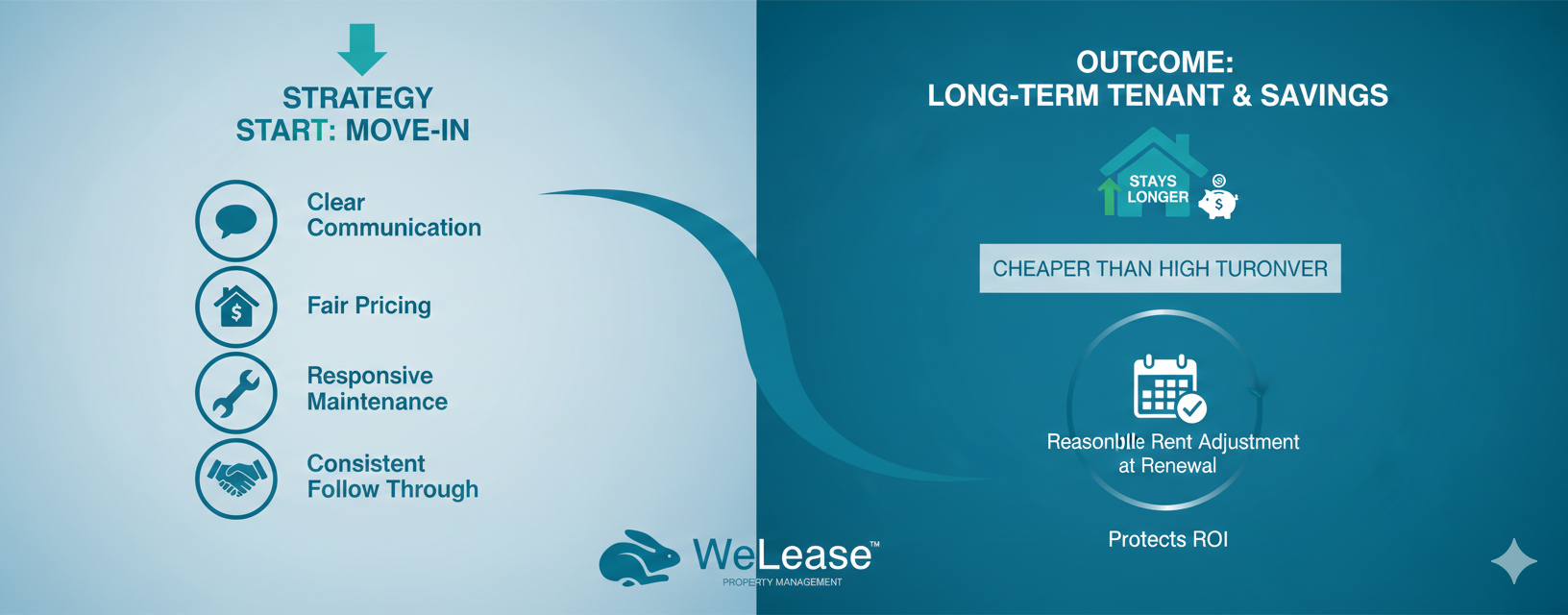
The best tenant retention strategies don’t start at renewal time. They start at move in.
Clear communication about expectations. Fair pricing relative to condition. Responsive maintenance. Consistent follow through on what you promise.
These aren’t complicated. But they require thinking past the immediate vacancy.
A tenant who feels respected and fairly treated is a tenant who stays. And a tenant who stays is a tenant who isn’t costing you rental vacancy costs every 12 months.
Strong tenant retention strategies also mean knowing when to adjust rent reasonably at renewal instead of chasing peak market rates. Sometimes leaving a little money on the table keeps a great tenant in place. And keeping a great tenant in place is almost always cheaper than finding a new one.
Where Most Landlords Get Stuck
The problem isn’t that owners don’t understand this logic. It’s that during vacancy, logic takes a backseat to panic.
It’s hard to think long term when you’re staring at an empty unit and a mortgage payment. That’s just human nature.
This is genuinely where professional oversight changes things. Not because property managers are smarter or have secret screening tools. But because they’re not emotionally attached to the outcome in the same way.
They can stick to systems. They can maintain proper tenant screening San Diego standards without second guessing themselves at 2am. They protect the long game because they’re not feeling the short term squeeze the same way an owner does.
Speed Fills Units. Quality Builds Portfolios.
Look, vacancy sucks. Nobody’s arguing otherwise.
But bad tenants are more expensive than empty units. That’s just math.
The smartest landlords don’t choose between speed and quality. They build systems that protect both. Clear marketing. Consistent standards. Reasonable pricing. Good communication.
And when they do feel that pressure to “just fill it,” they pause long enough to ask: am I solving a problem or creating a bigger one?
In San Diego’s rental market, where regulations keep changing and margins matter, tenant quality isn’t some luxury. It’s the foundation of everything else. Effective tenant retention strategies combined with thorough tenant screening San Diego landlords can rely on make all the difference between a profitable portfolio and a constant headache.
Worth Considering
If you’re feeling the squeeze right now, if vacancy is making you second guess your screening standards, you’re not alone. That’s a normal reaction to a stressful situation.
Talk to Yesenia & Billy

But before you sign someone who’s “probably fine,” it might be worth talking to people who do this full time. The team at WeLease works with San Diego property owners specifically on these kinds of decisions. Sometimes the fix isn’t moving faster. It’s adjusting the process so the right tenant shows up sooner.
Yesenia and Billy regularly help owners step back and evaluate whether speed is actually protecting their income or quietly undermining it. Sometimes the fix isn’t moving faster. It’s adjusting the process so the right tenant shows up sooner.
Disclaimer: This article is for general informational purposes only and reflects common property management patterns observed in the San Diego rental market. It does not constitute legal, financial, or real estate advice.
Rental laws, tenant behavior, and market conditions vary by property and location. For guidance specific to your situation, consult a qualified California attorney or licensed property management professional.
Key Takeaways
- Filling a vacancy quickly feels productive, but rushed placements often lead to higher long-term costs.
- Tenant quality impacts cash flow more than a slightly higher rent ever will.
- Short vacancies are usually cheaper than frequent turnover, repairs, and early lease breaks.
- Strong screening and clear expectations reduce operational stress over time.
- In San Diego’s regulated rental environment, stability protects ROI better than speed.
FAQs
Is it better to fill a rental quickly or wait for the right tenant?
A: Waiting usually costs less in the long run. A slightly longer vacancy often prevents turnover, maintenance issues, and early move-outs.
How does rushing a tenant placement increase costs?
A: Fast placements often lead to shorter stays, higher maintenance requests, and repeat vacancy, increasing total rental vacancy costs over time.
What defines a “quality tenant”?
A: Quality tenants communicate clearly, respect the property, pay consistently, and plan to stay, not just meet minimum screening criteria.
Does higher rent justify faster tenant placement?
A: Not always. One month of vacancy or turnover can erase months of higher rent, especially in San Diego’s regulated rental market.
When should landlords consider professional property management?
A: When tenant screening, communication, or vacancy decisions start feeling rushed or reactive, professional oversight often improves stability and net income.
Reviewed by Yesenia Nogales Co-Founder & Commanding Officer, WeLease REALTOR® | DRE# 01487100: Yesenia Nogales is a licensed REALTOR® and Co-Founder of WeLease Property Management. She specializes in residential sales, investment properties, and property management. Yesenia served on the board of the NAHREP San Diego Chapter for four years and was President in 2017. She is an active member of both NAHREP and NARPM. She also leads the San Diego Women Real Estate Investors group and is a member of the Southern California Developers Creative Investors Association. In addition, she volunteers with Friends of Del Cerros; WeLease Credentials: NARPM® Member, BBB Accredited, MLS Participant, Equal Housing Opportunity. Recognized as San Diego’s Best Property Management Company – Union-Tribune Winner (2022, 2024); Finalist (2023, 2025). DRE: 02047533

Ivana M. Janakieva is a Property Management Marketer and SEO Content Manager who turns confusing real estate jargon into practical, actionable advice. She’s the type who reads maintenance reports like morning news and can make lease agreement clauses sound (almost) fun. With years of experience writing about everything from tenant turnover and landlord-tenant laws to climate risks and curb appeal ROI, Ivana creates content for people who want straight answers about protecting and profiting from their most valuable asset, their property.