Should I Sell My Property in 2026? A Realistic Look for San Diego Landlords
Home / Should I Sell My Property in 2026? A Realistic Look for San Diego Landlords
Should I Sell My Property in 2026? A Realistic Look for San Diego Landlords
Why 2026 Could Be a Pivot Year for San Diego Property Owners
If you’re a landlord in San Diego, you’ve likely felt it: 2026 carries weight. After a few years of pricing spikes, rate whiplash, and unpredictable trends, it finally feels like the market is balancing out. But does that mean it’s the right time to sell?
For property owners juggling rising costs, tax questions, or plain burnout, the decision to sell in 2026 isn’t as clear-cut as the headlines might suggest. It’s not just about chasing price gains. It’s about whether your rental still aligns with your financial goals, whether it’s in North Park, Mission Hills, or even Encinitas rentals that continue drawing long-term interest.
Let’s break down what the data says, what experts are projecting, and what actually matters for landlords debating the hold-or-sell question in 2026.
2026 San Diego Housing Market: What We’re Seeing
Home Prices: A Breather, Not a Bust
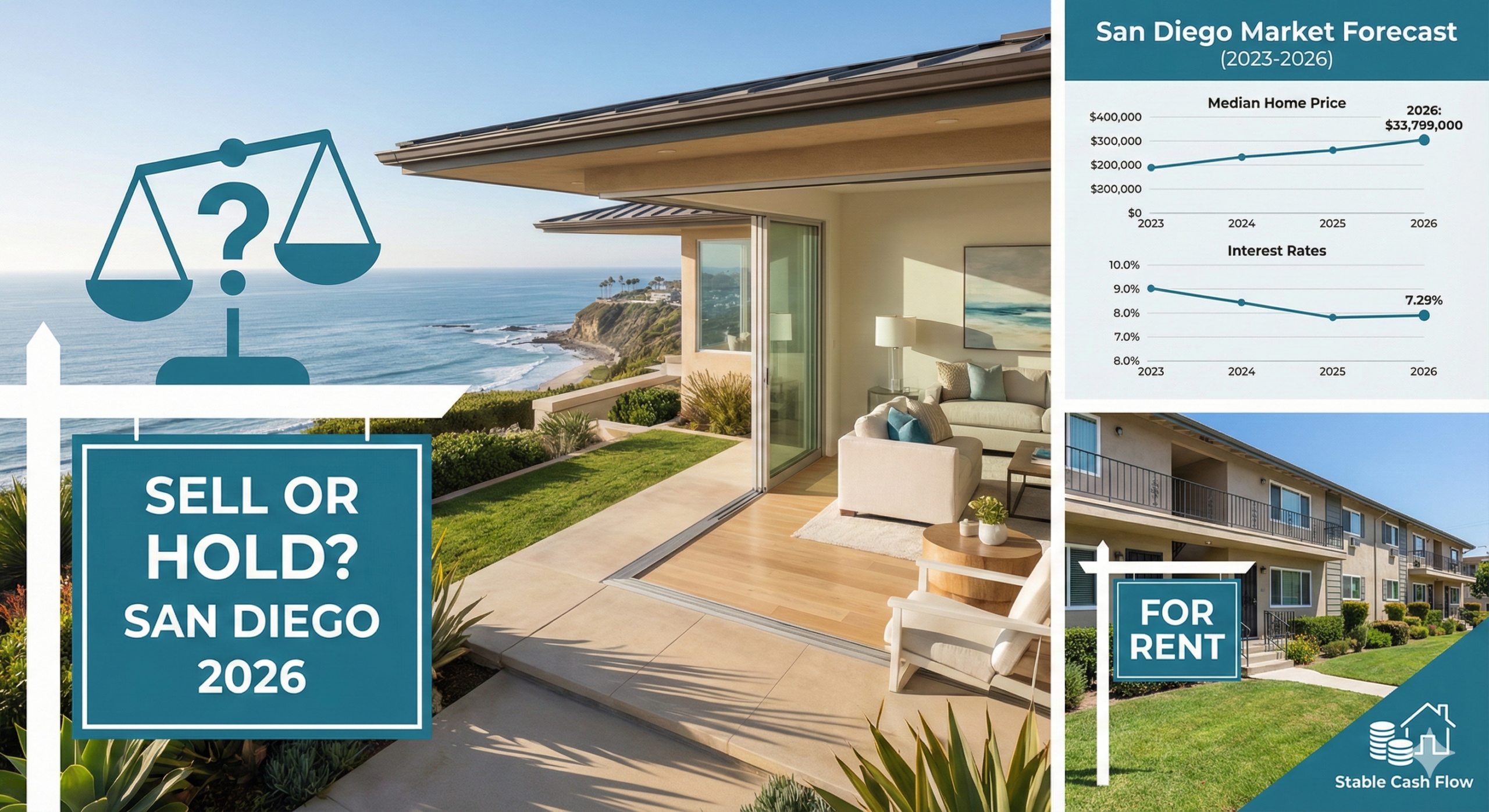
After the red-hot run-up during the pandemic years, the San Diego market has been recalibrating. The median home price is floating around $940,000 to $970,000. Most forecasts, including the California Association of Realtors, expect slow but steady growth, somewhere between 1.2% and 5% this year.
Not a gold rush, but not a dip either.
What that means: You’re unlikely to get a surprise windfall by waiting to list, but you’re also not at major risk of losing equity. It’s a steady path. For sellers, that may signal time to cash in if your other numbers work. For holders, it’s reassuring.
Mortgage Rates: Stabilizing, But Still Sticky
Rates have been the elephant in the room since 2022. After climbing as high as 8%, they’ve now settled around 6.3% to 6.8%. Looking forward:
- Fannie Mae is calling for 5.9% by end of year.
- NAR and the Mortgage Bankers Association are in the 6.0% to 6.4% range.
Lower rates = more buyer interest. But for landlords, it also affects refinancing potential and how many renters stay renters longer (great news for coastal rentals San Diego owners).
Inventory: Loosening, But Still Tight
Active listings in San Diego have grown, up over 20% since 2023. But don’t mistake that for a flooded market. Months of supply sits between 2.0 and 2.3, not even close to the 5-6 month range that defines a balanced market.
Properties are sitting a bit longer (around 63 DOM), which gives buyers breathing room. But sellers remain in a favorable climate, especially in supply-constrained neighborhoods like coastal corridors, the Mission Hills rental market and other high-demand zones where Solana Beach property management teams continue reporting strong renter demand.
Rental Market: Why Many Landlords Are Holding On
Steady Rents, Low Vacancy
For rental property owners, 2026 is shaping up just fine. Rent growth is expected to be a modest 1% to 3%, in line with inflation. Median rents range from $2,700 to $3,100+, depending on the unit and location.
Vacancy rates? Still below 5%. In San Diego, that’s strong.
What’s Driving Demand?
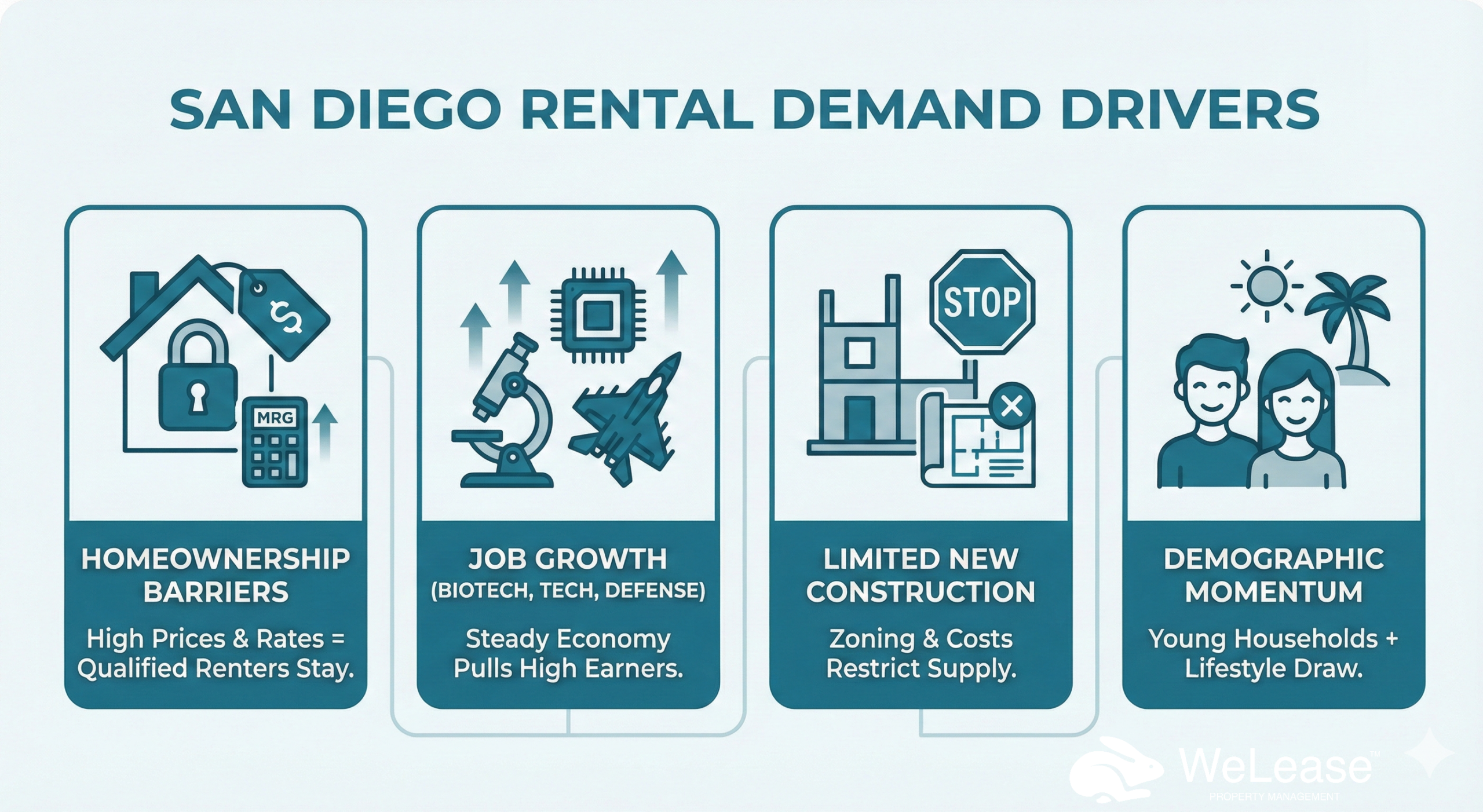
- Homeownership barriers: With purchase prices still sky-high, and rates keeping monthly mortgage payments steep, many qualified renters aren’t budging.
- Job growth: San Diego’s economy is steady. Sectors like biotech, defense, and tech continue pulling in high-income earners, many of whom rent.
- Limited new construction: Between zoning restrictions and sky-high development costs, we’re not seeing enough new housing units to meet demand.
- Demographic momentum: Younger renters are forming households. And with lifestyle perks like beach access and great weather, San Diego remains a top draw.
Some landlords are even exploring new revenue with ADUs. If you’ve got the space, ADU potential in up-and-coming San Diego neighborhoods might tip the scales in favor of holding.
The Tax Side: The Part That Sneaks Up on Sellers
Capital Gains: The Tax That Bites the Hardest
Selling an investment property means facing capital gains tax. Long-term capital gains rates range from 0% to 20% depending on income. Plus:
- Depreciation recapture adds a 25% federal tax hit
- High earners might face the 3.8% Net Investment Income Tax
If you’ve owned your property for years, depreciation alone can trigger a hefty tax bill.
Primary homes do enjoy exclusions, up to $500,000 in gains for married couples. But rental properties don’t.
Strategies like 1031 exchanges or installment sales can soften the blow, but they require planning. A good tax pro can walk you through it.
Property Taxes: A Reason to Hold?
Prop 13 keeps your property tax assessment low if you’ve held the property for a while. Sell it, and the new owner faces a full market-value reassessment. That can make your existing cash flow look even sweeter by comparison.
Reasons to Sell in 2026
Some scenarios where selling might make sense:
- You’ve got high equity but low cash flow
- Your rental needs big repairs, and you’re over it
- You’re moving, retiring, or simplifying your portfolio
- Your unit is in a softening micro-market (e.g. high-HOA condos or oversupplied neighborhoods)
- You’ve found a better investment and can swap via 1031
Remember: it’s not just about what your property is worth. It’s about what you’d do with the money after the sale.
Reasons to Hold in 2026
On the flip side, here’s when holding might be smarter:
- You’ve got solid cash flow and reliable tenants
- Your mortgage rate is locked in below 4%
- Your neighborhood is holding strong or appreciating (think North Park rental demand or renting in Hillcrest)
- You want to keep depreciating and deferring taxes
- You’re adding an ADU or improving the property
- You’re focused on long-term appreciation and bg dynamics, seasonal trendsuilding generational wealth
- For landlords considering properties further north, Encinitas rentals and Solana Beach property management come with their own set of pricin, and coastal regulations worth factoring into long-term planning.
The Middle Ground: Selling Selectively
For multi-property owners, 2026 may be the year to rebalance:
- Sell underperformers
- Hold strong performers
- Reinvest strategically, maybe even out of market if that fits your goals
Business Improvement Districts in San Diego can also influence the equation. If your properties fall within BID zones, city-funded improvements might support future appreciation or rental growth.
What the Experts See Ahead

Big names like the National Association of Realtors and Fannie Mae expect modest growth in 2026, think 3% to 4% home price appreciation and slightly lower interest rates.
But we’ve also seen more cautious takes, like the First Tuesday Journal pointing to broader economic headwinds. It’s a mixed bag, which means your personal situation matters more than ever.
Before You Decide: A Few Steps to Take
Whether you’re leaning toward selling or holding:
- Run the numbers on your property’s income and expenses
- Get a current market valuation
- Talk to your CPA about potential tax liability
- Review your mortgage terms and insurance coverage
- Think about where you’d put the proceeds if you sell
- Ask yourself what lifestyle you want, active landlord or hands-off investor?
Working with a local property manager can also help clarify the picture. They can provide realistic rental comps, handle tenant communication, and free up your time. In areas like Del Cerro, working with local experts can help clarify rental demand and realistic rent ranges, especially near neighborhoods like the College Area or Allied Gardens. Meanwhile, beachside communities like Mission Beach benefit from teams with deep experience in coastal rentals San Diego investors rely on.
Talk to Yesenia and Billy
If you’re feeling unsure, you’re not alone. We’ve helped plenty of owners run the numbers, weigh the tradeoffs, and plan for what’s next, whether that means prepping a property for sale or improving its rental performance. Yesenia and Billy are always ready to chat strategy, without pressure.
Disclaimer: This article is intended for general informational purposes and should not be considered tax, legal, or financial advice. Every landlord’s situation is different. We strongly recommend speaking with a CPA, financial advisor, or real estate attorney before making decisions about selling or holding rental property in 2026.
Key Takeaways
- 2026 looks stable for sellers and solid for landlords
- Capital gains tax is a huge factor, run the math carefully
- Rental demand in San Diego remains strong, especially in high-demand zones
- Holding may make more sense if your property performs well and you’ve got favorable tax and financing
- Selling selectively can help rebalance your portfolio if done strategically
FAQ
1. Is the San Diego market favorable for sellers in 2026?
A: Yes, although growth is modest, low inventory and steady demand still make it favorable for many sellers.
2. Are coastal rentals in San Diego still in demand?
A: Absolutely. Properties near the coast, such as Encinitas rentals, continue to attract renters due to location and lifestyle.
3. Should I work with a property manager before selling?
A: If you’re unsure, having professional oversight, like what you’d get from Solana Beach property management firms, can help stabilize your asset while you weigh your options.
4. What’s a 1031 Exchange and should I consider it?
A: It’s a tax-deferral strategy where you reinvest proceeds from a sale into another investment property. Very helpful if you’re looking to upgrade without paying capital gains immediately.
5. How much are San Diego property taxes?
A: Typically 1.1% to 1.3% of assessed value, with Prop 13 limiting annual increases.
Reviewed by Billy Colestock Co-Founder & Executive Officer, WeLease REALTOR® | DRE# 01771188: Billy Colestock brings over 20 years of experience in real estate to his leadership role at WeLease Property Management. As a licensed REALTOR® and Co-Founder of WeLease, he is a trusted voice in the San Diego real estate community and frequently leads educational sessions at the San Diego Association of REALTORS® (SDAR), covering key topics such as evictions, tenant screening, maintenance, and housing regulations. Billy is also a member of the National Association of REALTORS®, California Association of REALTORS®, and serves as President of his HOA. His depth of expertise ensures WeLease remains proactive, compliant, and highly effective in serving homeowners and investors throughout Southern California | WeLease Credentials: NARPM® Member, BBB Accredited, MLS Participant, Equal Housing Opportunity. Recognized as San Diego’s Best Property Management Company – Union-Tribune Winner (2022, 2024); Finalist (2023, 2025). DRE: 02047533

Ivana M. Janakieva is a Property Management Marketer and SEO Content Manager who turns confusing real estate jargon into practical, actionable advice. She’s the type who reads maintenance reports like morning news and can make lease agreement clauses sound (almost) fun. With years of experience writing about everything from tenant turnover and landlord-tenant laws to climate risks and curb appeal ROI, Ivana creates content for people who want straight answers about protecting and profiting from their most valuable asset, their property.