Cash Flow vs. Appreciation: What San Diego Landlords Should Prioritize in 2026
Home / Cash Flow vs. Appreciation: What San Diego Landlords Should Prioritize in 2026
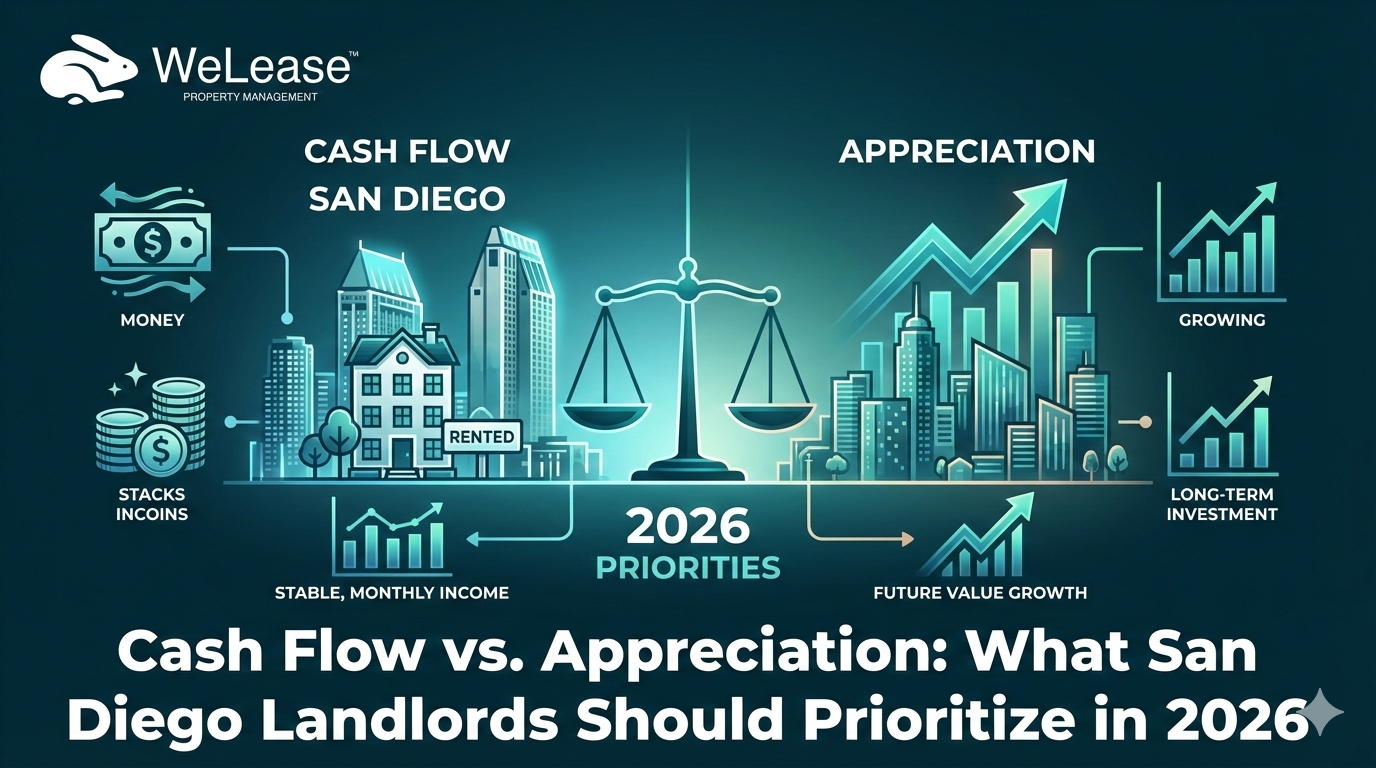
Cash Flow vs. Appreciation: What San Diego Landlords Should Prioritize in 2026
In 2026, the real question for San Diego landlords isn’t whether real estate still works. It does.
The better question is this: in a more regulated, more nuanced market, where does performance actually come from?
San Diego rental property strategy in 2026 requires more than patience. Regulatory shifts, evolving rent caps, and tighter operating margins mean execution matters more than ever. The landlords performing best right now are not reacting to the market. They’re positioning ahead of it.
That shift, from passive ownership to intentional strategy, is where the cash flow vs. appreciation conversation truly begins.
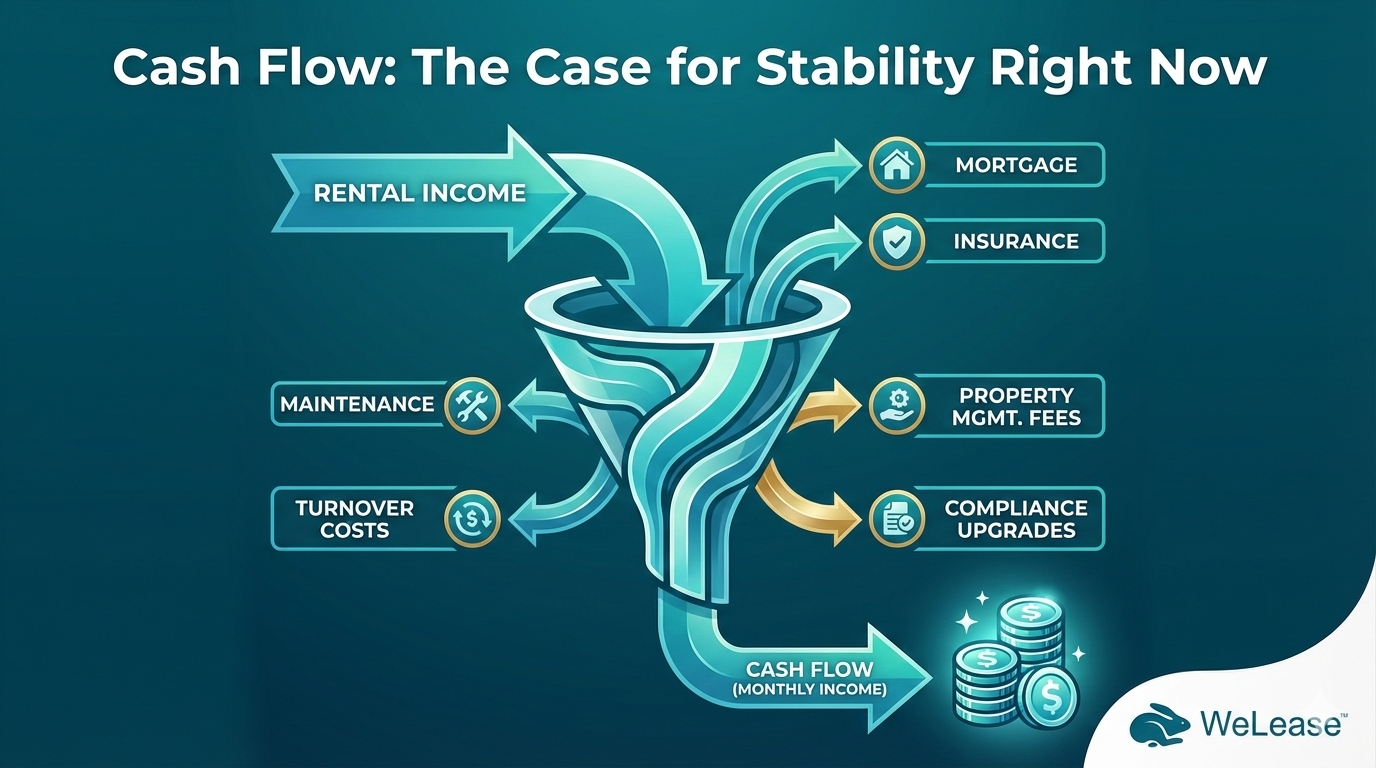
Cash Flow: The Case for Stability Right Now
Understanding the 2026 Shift in San Diego
For years, appreciation carried the narrative in San Diego real estate. Values climbed. Equity accumulated. Owners who simply held property benefited. 2026 looks different.
The market hasn’t collapsed. Demand remains strong. San Diego is still one of the most supply-constrained and desirable regions in California. But growth is no longer automatic. It’s more selective. More dependent on structure.
That means landlords need clarity on what they are optimizing for:
- Immediate performance
- Long-term equity
- Or a strategic balance of both
This doesn’t mean they should choose one over the other. It’s about knowing which lever to pull and when. (If that sounds familiar, it might be worth reading about some of the common ways to fix money loss as a landlord before it compounds.)
Appreciation: Positioning, Not Guessing
Appreciation cannot be forced. But it can absolutely be positioned.
San Diego rental property appreciation in 2026 is more neighborhood-dependent and performance-based than in previous cycles. Properties with strong rent rolls, updated systems, scalable layouts, and clean compliance histories continue to command premium valuations.
Strategic improvements still matter:
- Unit upgrades that support rent durability
- Operational clean-up before refinance
- Stabilized occupancy
- Smart debt management
Appreciation now rewards preparedness. Not speculation.And for landlords building long-term wealth, that distinction matters.
The Third Lever Most Landlords Ignore: Density
There’s a third lever that rarely gets discussed in the cash flow vs. appreciation rental property conversation: density.
California’s pro-ADU legislation continues to create meaningful opportunities for expansion. In many San Diego neighborhoods:
- Owner-occupancy is not required
- Parking requirements are reduced or waived
- Multifamily properties can add detached ADUs
- Underutilized garages or storage can be converted
- Lot splits may be possible under certain zoning rules
For owners sitting on larger lots or multifamily properties with excess space, adding units can completely shift the math.
An ADU can:
- Increase monthly rental income immediately
- Improve debt service coverage
- Strengthen refinance positioning
- Increase long-term valuation
In a regulated rent environment, controlled expansion often outperforms passive waiting.
This is where cash flow and appreciation intersect.
And in 2026, intersection strategies tend to outperform single-lane thinking.
What Makes San Diego Unique in 2026
San Diego remains one of the most demand-resilient rental markets in California. Job growth in biotech, defense, healthcare, and technology continues to support housing demand. Supply remains constrained in most established neighborhoods.
But regulatory complexity is layered:
- Rent caps
- Just-cause eviction protections
- Notice timing requirements
- Fire safety updates
- Inspection mandates
Understanding California rental property investment strategy now requires operational awareness, not just acquisition insight.
This is where many DIY landlords begin to feel pressure.
It’s also why themes explored in why some landlords fail and how to make sure you don’t tend to surface more frequently in layered markets like this one.
Execution matters.
Cash Flow vs. Appreciation: It’s Not Either/Or
Strong San Diego rental property strategy in 2026 does not abandon appreciation in favor of cash flow.
It stabilizes cash flow first, then positions for growth.
A property with:
- Low vacancy
- Tight operations
- Proper documentation
- Strategic rent pacing
- Compliance alignment
…is far better positioned for refinance, sale, or long-term equity growth.
The reverse is rarely true.
This is also where the question of should you self-manage your rental property in San Diego becomes more practical than philosophical. As portfolios scale, complexity compounds.
And scale without structure often erodes performance.
When Strategy Needs to Be Re-Evaluated
If you are asking:
- Should I prioritize paying down debt or expanding units?
- Is my current rent pacing aligned with regulations?
- Would adding an ADU materially improve returns?
- Am I optimizing operations before considering expansion?
You are already thinking in the right direction. 2026 is not punishing landlords. It is rewarding clarity.
Talk to Yesenia & Billy

At first glance, the cash flow vs. appreciation question can seem philosophical. A long-term equity play versus steady monthly income. But in 2026, for San Diego landlords, it’s less about theory and more about execution.
The difference between a property that quietly performs and one that constantly feels tight usually comes down to operational clarity. Tenant quality. Renewal pacing. Expense discipline. Compliance positioning. These aren’t abstract ideas — they’re levers that directly influence whether your strategy actually holds up under pressure.
Yesenia and Billy work with San Diego owners to evaluate where their properties truly sit on the cash flow vs. appreciation spectrum. That means looking at real numbers, regulatory exposure, leverage structure, and tenant behavior before deciding which direction makes the most sense. In a market this layered, protecting stability tends to outperform chasing assumptions.
Disclaimer: This article is intended for general informational purposes only and reflects common trends and observations within the San Diego rental market. It should not be considered legal, financial, or tax advice.
Rental laws, local regulations, and market conditions change frequently, and individual properties may be subject to different rules or requirements. For guidance specific to your property, investment structure, or compliance obligations, consult a qualified California attorney, CPA, or professional property management company like WeLease.
Key Takeaways
- Cash flow provides stability in a regulated market.
- Appreciation in 2026 rewards preparation, not speculation.
- Density expansion through ADUs can improve both income and valuation.
- Operational precision is now a competitive advantage.
- San Diego remains supply-constrained and demand-resilient — but strategy matters more than optimism.
FAQs
Should San Diego landlords focus more on cash flow in 2026?
In most cases, stabilizing cash flow first provides the foundation for long-term appreciation and strategic expansion.
Is appreciation still strong in San Diego rental properties?
Yes, but it is more neighborhood-specific and performance-driven than in prior years.
Are ADUs worth considering in 2026?
For many properties, yes. California’s ADU-friendly legislation makes adding units one of the most powerful wealth-building tools available.
Does professional property management improve ROI?
In a layered regulatory market, experienced property management often protects income, reduces vacancy, and strengthens long-term performance.
Reviewed by Billy Colestock Co-Founder & Executive Officer, WeLease REALTOR® | DRE# 01771188: Billy Colestock brings over 20 years of experience in real estate to his leadership role at WeLease Property Management. As a licensed REALTOR® and Co-Founder of WeLease, he is a trusted voice in the San Diego real estate community and frequently leads educational sessions at the San Diego Association of REALTORS® (SDAR), covering key topics such as evictions, tenant screening, maintenance, and housing regulations. Billy is also a member of the National Association of REALTORS®, California Association of REALTORS®, and serves as President of his HOA. His depth of expertise ensures WeLease remains proactive, compliant, and highly effective in serving homeowners and investors throughout Southern California | WeLease Credentials: NARPM® Member, BBB Accredited, MLS Participant, Equal Housing Opportunity. Recognized as San Diego’s Best Property Management Company – Union-Tribune Winner (2022, 2024); Finalist (2023, 2025). DRE: 02047533

Ivana M. Janakieva is a Property Management Marketer and SEO Content Manager who turns confusing real estate jargon into practical, actionable advice. She’s the type who reads maintenance reports like morning news and can make lease agreement clauses sound (almost) fun. With years of experience writing about everything from tenant turnover and landlord-tenant laws to climate risks and curb appeal ROI, Ivana creates content for people who want straight answers about protecting and profiting from their most valuable asset, their property.