What San Diego Landlords Should Prepare for in 2026 Regulations
Home / What San Diego Landlords Should Prepare for in 2026 Regulations
What San Diego Landlords Should Prepare for in 2026 Regulations
If 2025 taught San Diego landlords anything, it’s that regulatory change rarely arrives all at once. It trickles in. Then it stacks. And suddenly, what used to feel manageable starts requiring a lot more attention.
Looking ahead to 2026, the goal isn’t to predict every new ordinance or bill. That’s unrealistic. The smarter move is understanding where pressure is building, what types of rules are expanding, and how those shifts affect everyday rental decisions.
And no, it’s not time to panic. It is time for preparation. Because landlords who adjust early usually spend less time reacting later.
The Regulatory Direction Is Clear, Even If the Details Aren’t
Most San Diego rental regulations don’t come out of nowhere. They follow a pattern.
Over the last few years, the focus has consistently been on:
- Tenant protections
- Rent stabilization
- Stricter enforcement, not just new rules
- Narrower margins for error in documentation and notice timing
That direction is unlikely to reverse in 2026.
For owners, this means compliance is no longer a background task. It’s becoming part of daily operations, especially for anyone managing more than one unit or planning to hold long term.
This broader trend has already been visible in recent updates around local San Diego rental ordinances that landlords couldn’t afford to overlook in 2025, and those frameworks are now shaping what comes next.
Rent Caps Will Continue to Shape Pricing Decisions
Rent control discussions tend to resurface every year, sometimes quietly, sometimes loudly. Regardless of new proposals, existing caps already influence how and when rent increases make sense.
Statewide rules still apply. Local interpretations still matter. And enforcement has become more consistent.
For 2026, landlords should be thinking less about “How much can I raise rent?” and more about:
- Timing increases correctly
- Documenting them properly
- Aligning increases with lease renewals and notice requirements
- Understanding when exemptions apply and when they don’t
This builds directly on what many owners learned while navigating how AB-1482 rent caps have shaped San Diego rentals year over year, especially when expectations didn’t always match reality.
Tenant Protections Are Expanding, Not Softening
Another area likely to remain active is tenant protection.
Just-cause eviction standards, relocation requirements, and procedural rules have become more detailed, not less. In 2026, mistakes are less likely to be brushed off as technicalities.
Owners should expect:
- Less flexibility around termination notices
- More scrutiny on how and why a tenancy ends
- Higher documentation standards if disputes arise
Landlords who went through 2025 already saw how easily small missteps could escalate. The same patterns will continue, which is why understanding how tenant protection rules changed for San Diego landlords in 2025 remains relevant even as the calendar flips.
Evictions Will Remain Procedural, Not Practical
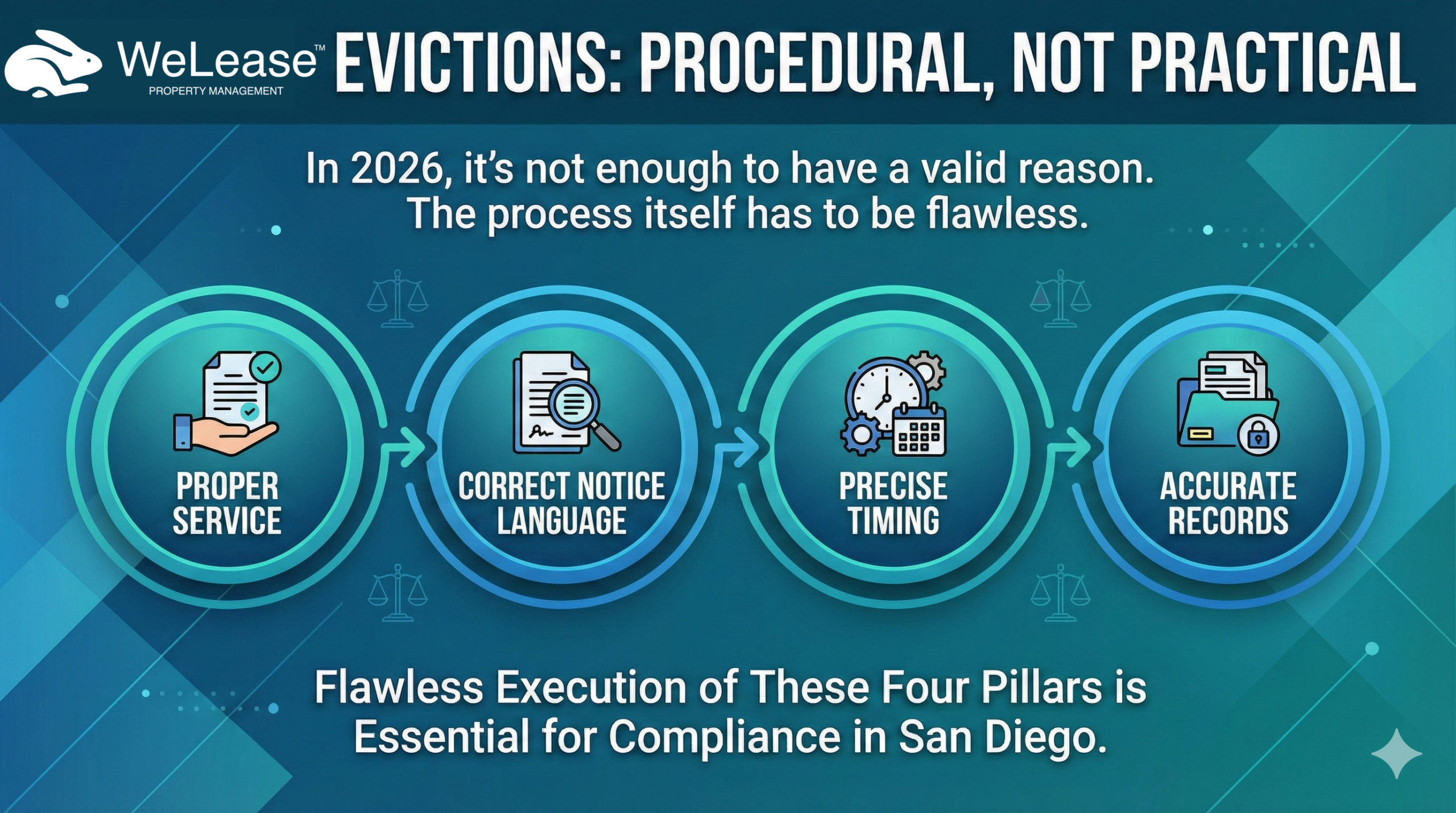
Evictions are often discussed as a last resort. In practice, they’re also one of the most regulated processes in property management.
In 2026, it’s not enough to have a valid reason. The process itself has to be flawless.
That includes:
- Proper service
- Correct notice language
- Precise timing
- Accurate records
Owners who underestimate the process often learn the hard way why recent San Diego eviction law updates created delays landlords weren’t prepared for, even when the underlying issue seemed straightforward.
Enforcement Is Becoming More Active
One of the biggest shifts isn’t the rules themselves. It’s enforcement.
San Diego has invested more resources into complaint follow-ups, inspections, and tenant outreach. That changes the risk profile for landlords who rely on informal practices or outdated templates.
In 2026, expect:
- Faster response to tenant complaints
- Less tolerance for “we’ll fix it later” approaches
- Higher penalties for repeat or ignored violations
This is the same environment that exposed many owners to costly eviction mistakes San Diego landlords made when procedures weren’t followed closely.
Why Operational Consistency Matters More in 2026
As regulations grow more detailed, inconsistency becomes expensive.
Missed deadlines, unclear communication, and incomplete records are the kinds of issues that don’t show up immediately. They surface later, often when an owner least expects it.
This is where operational discipline matters:
- Standardized lease language
- Consistent notice tracking
- Clear maintenance records
- Organized communication logs
For some landlords, this is manageable solo. For others, it becomes the point where professional support makes sense.
How Prepared Landlords Stay Ahead
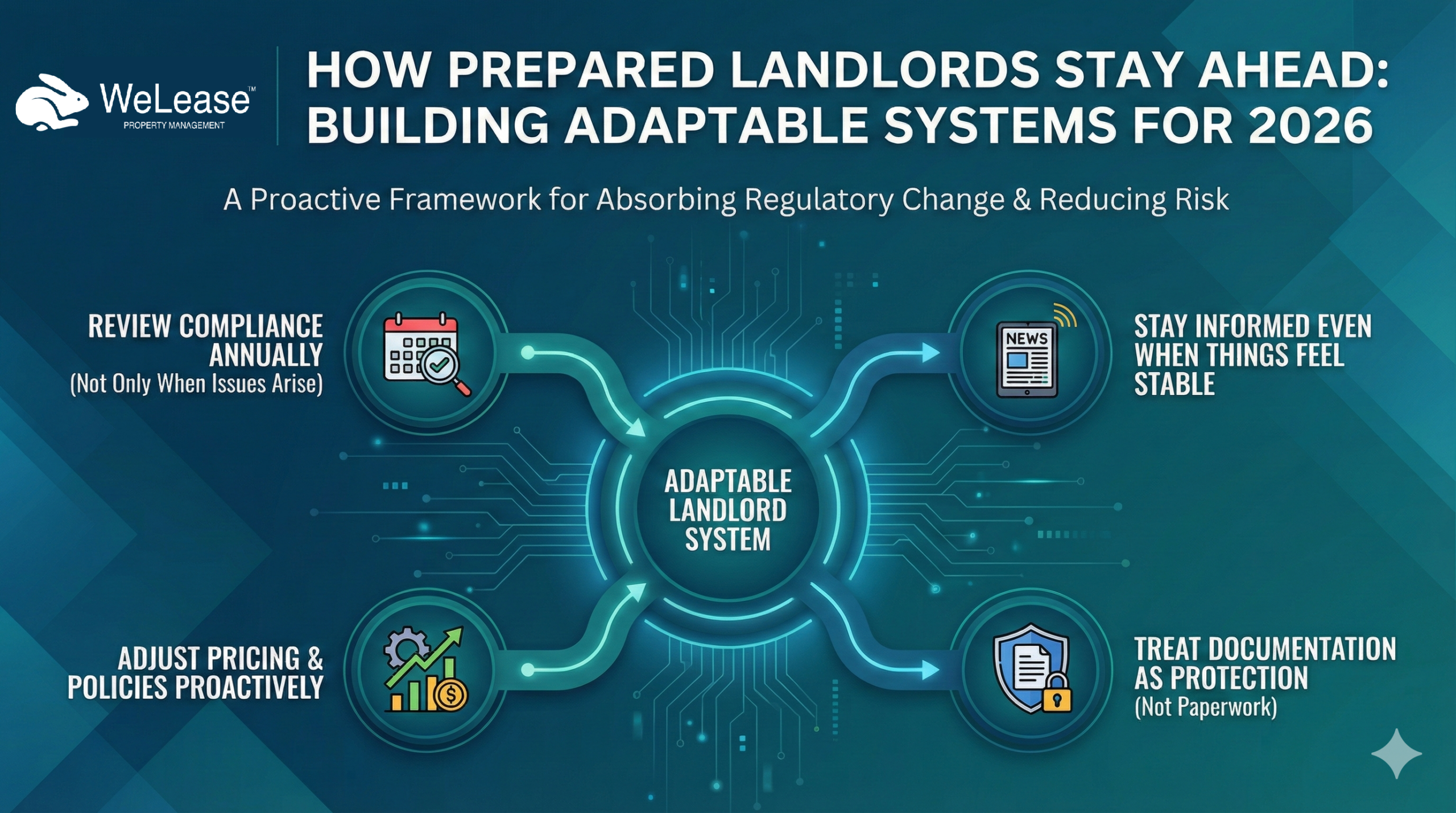
Preparation for 2026 doesn’t mean memorizing every statute. It means building systems that can absorb change.
Landlords who stay ahead typically:
- Review compliance annually, not only when issues arise
- Adjust pricing and policies proactively
- Treat documentation as protection, not paperwork
- Stay informed even when things feel stable
That approach is also why many owners eventually lean on experienced teams offering professional property management in San Diego to reduce exposure and keep operations aligned as rules evolve.
Final Thoughts on 2026 Regulations
We can’t say that San Diego’s rental market has become unworkable. Instead, it has become more structured.
For landlords who adapt, that structure can actually reduce surprises. For those who don’t, even small missteps can feel bigger than they used to.
The best preparation for 2026 is understanding direction, tightening operations, and making adjustments before pressure builds.
Regulations will keep changing. The landlords who stay calm, informed, and consistent are the ones who keep moving forward.
Talk to Billy & Yesenia

Regulations don’t usually cause problems overnight. Most issues show up slowly. A missed notice. A delayed repair. A process that worked fine last year but no longer does.
Billy and Yesenia work with San Diego landlords to help spot those pressure points early. Not just to stay compliant, but to make sure operational decisions still make sense as the rules shift.
If you’re unsure how upcoming regulations affect your property, your lease structure, or your current systems, a quick conversation can often clarify what actually needs attention and what doesn’t.
Sometimes staying ahead is less about reacting to new laws and more about tightening what’s already in place.
Disclaimer: This article is provided for general informational purposes only and reflects common regulatory trends affecting San Diego rental properties in 2026. It is not intended to serve as legal, financial, or tax advice.
Landlord-tenant laws, local ordinances, and enforcement practices change frequently and may apply differently depending on property type, ownership structure, and timing. For guidance specific to your property or situation, consult a qualified California attorney or work with a licensed property management professional.
Key Takeaways
- San Diego rental regulations in 2026 will continue tightening around rent control, tenant protections, and enforcement.
- Compliance mistakes are becoming more costly as enforcement becomes more active and less forgiving.
- Rent increases are still possible, but timing, documentation, and notice requirements matter more than ever.
- Evictions remain highly procedural. Small errors can cause long delays or dismissals.
- Landlords who rely on consistent systems and clear processes are better positioned to adapt as laws evolve.
FAQs
What new regulations should San Diego landlords expect in 2026?
A: Most changes will build on existing rules, including rent caps, tenant protections, and stricter enforcement rather than entirely new laws.
Will rent control get stricter in San Diego?
A: Rent control discussions are ongoing. Even without new caps, existing limits already shape pricing and renewal strategies.
Are evictions becoming harder in San Diego?
A: Yes. The process is more procedural, and errors in notice language, timing, or service can derail a case.
How can landlords reduce compliance risk in 2026?
A: By standardizing documentation, tracking notices carefully, staying informed on updates, and reviewing operations regularly.
Do small landlords need to worry about these changes?
A: Absolutely. Many enforcement actions stem from routine issues like maintenance delays or notice mistakes, not large violations.
Reviewed by Billy Colestock Co-Founder & Executive Officer, WeLease REALTOR® | DRE# 01771188: Billy Colestock brings over 20 years of experience in real estate to his leadership role at WeLease Property Management. As a licensed REALTOR® and Co-Founder of WeLease, he is a trusted voice in the San Diego real estate community and frequently leads educational sessions at the San Diego Association of REALTORS® (SDAR), covering key topics such as evictions, tenant screening, maintenance, and housing regulations. Billy is also a member of the National Association of REALTORS®, California Association of REALTORS®, and serves as President of his HOA. His depth of expertise ensures WeLease remains proactive, compliant, and highly effective in serving homeowners and investors throughout Southern California | WeLease Credentials: NARPM® Member, BBB Accredited, MLS Participant, Equal Housing Opportunity. Recognized as San Diego’s Best Property Management Company – Union-Tribune Winner (2022, 2024); Finalist (2023, 2025). DRE: 02047533

Ivana M. Janakieva is a Property Management Marketer and SEO Content Manager who turns confusing real estate jargon into practical, actionable advice. She’s the type who reads maintenance reports like morning news and can make lease agreement clauses sound (almost) fun. With years of experience writing about everything from tenant turnover and landlord-tenant laws to climate risks and curb appeal ROI, Ivana creates content for people who want straight answers about protecting and profiting from their most valuable asset, their property.