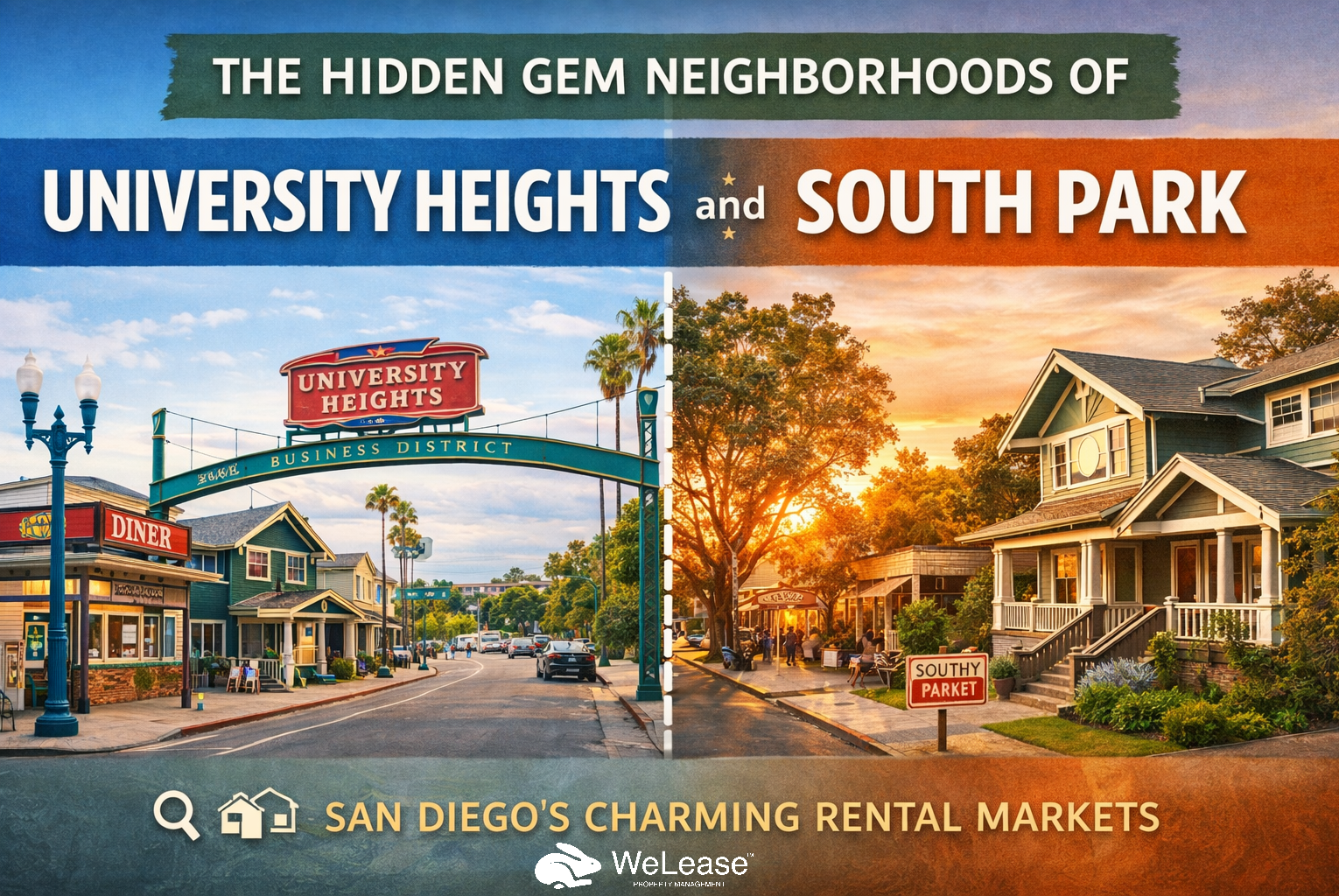
The Hidden Gem Neighborhoods of University Heights and South Park
Home / The Hidden Gem Neighborhoods of University Heights and South Park
The Hidden Gem Neighborhoods of University Heights and South Park
Some San Diego rental neighborhoods get all the attention. Others quietly outperform, without the hype, without the drama, and without the constant turnover.
University Heights and South Park fall squarely into that second category.
They don’t have beachfront views. They aren’t flashy. But for landlords who care about stable tenants, walkable streets, and predictable rental demand, these two neighborhoods consistently punch above their weight. And in 2025, they’re starting to stand out even more.
Let’s break down why University Heights rentals and South Park property management keep showing up on the radar for smart San Diego landlords.
Why “Hidden Gem” Is the Right Term Here
University Heights and South Park sit just east of Balboa Park, tucked between Hillcrest, North Park, and Downtown. Location-wise, they’re hard to beat. But they’ve managed to avoid becoming overbuilt or overhyped.
That balance matters.
Both neighborhoods attract renters who want charm, walkability, and proximity without paying luxury-tier rents. Think long-term professionals, couples, small families, and creatives. Not party crowds. Not short-term churn.
In other words, renters who tend to stay.
That’s what makes these areas quietly strong within the broader mix of San Diego rental neighborhoods.
University Heights: Compact, Central, Consistently in Demand
University Heights is small, but that’s part of its appeal.
The neighborhood sits right above Hillcrest and next to North Park, which means tenants get access to restaurants, coffee shops, nightlife, and transit without living in the middle of it. For many renters, that’s the sweet spot.
University Heights rentals tend to attract:
- Healthcare professionals working near UCSD Medical Center
- Remote workers who want walkability without noise
- Renters planning to stay two to five years, not six months
Housing stock here is mostly small apartment buildings, duplexes, and older single-family homes. Many units have character. Original hardwood floors. Courtyards. Details that don’t exist in newer developments.
From a landlord perspective, that creates both opportunity and responsibility.
These properties rent well, but they also require attention. Deferred maintenance shows quickly. Tenants here notice things. That’s why many owners lean on experienced property managers to keep small issues from turning into bigger ones.
This neighborhood often comes up in conversations about why North Park continues to outperform nearby areas, even though University Heights tends to deliver similar tenant quality with slightly less volatility.
South Park: Slower Pace, Stronger Tenant Loyalty
South Park feels different almost immediately.
Wider streets. More trees. A quieter rhythm. Still walkable, but calmer. It’s the kind of neighborhood where tenants move in and stop looking elsewhere.
That’s the big advantage.
South Park property management is often less about constant leasing and more about retention. Renters here skew toward:
- Long-term residents
- Families with young kids
- Professionals who value stability over trendiness
The housing mix leans heavily toward single-family homes and smaller multifamily properties. Yards are common. Garages matter. So does parking, which is less of a daily headache than in denser neighborhoods.
South Park also benefits from its proximity to Downtown without feeling like an extension of it. That balance continues to attract renters priced out of Mission Hills or Hillcrest but still looking for character and community.
For landlords, South Park tends to offer fewer vacancy gaps and lower turnover costs. You may not push rents aggressively every year, but you’re also not constantly repainting and relisting.
That tradeoff works well for owners focused on net returns, not just headline rent numbers.
Rent Behavior: Steady Beats Flashy
Neither University Heights nor South Park experiences wild rent swings.
That’s a good thing.
Rents here tend to rise steadily, not explosively. Tenants expect reasonable increases. Owners who push too hard often lose good renters unnecessarily. This aligns well with current regulatory realities, especially when factoring in how San Diego’s rent cap rules affect annual increases.
In both neighborhoods, pricing strategy matters more than pricing ambition.
Landlords who understand their tenant base and local comparables tend to do well. Those who treat these areas like short-term plays often struggle.
This is where professional guidance can make a difference, especially for owners navigating cash flow challenges that creep up quietly over time.
Tenant Quality Over Tenant Volume
A recurring theme in both neighborhoods is tenant behavior.
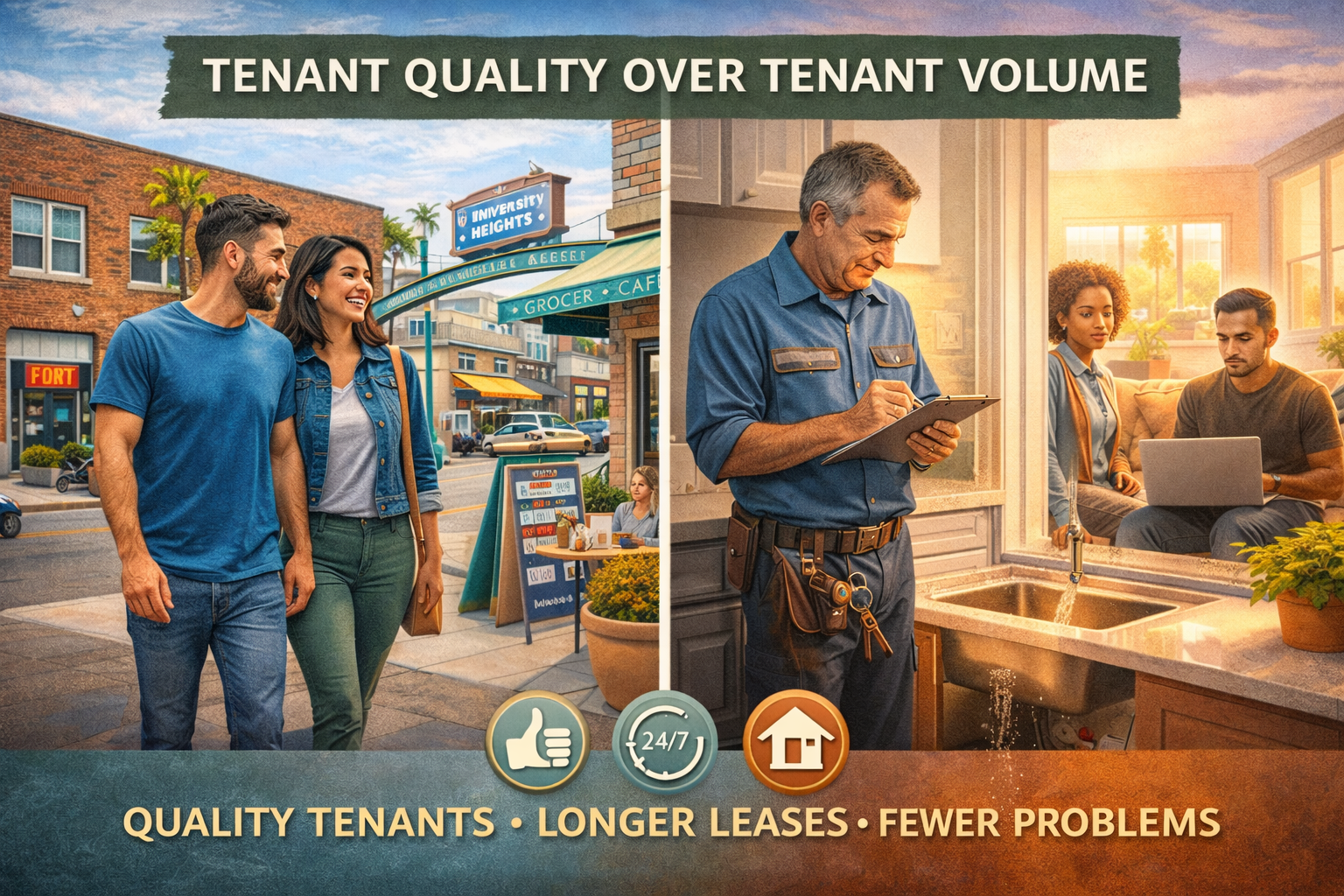
University Heights and South Park attract renters who care about their surroundings. They walk the neighborhood. They frequent local businesses. They notice maintenance issues early and expect them to be handled properly.
That’s not a bad thing. It’s just different.
Owners who respond quickly and keep properties well maintained are rewarded with longer leases and fewer problems. Owners who ignore small issues tend to see frustration build faster here than in more transient neighborhoods.
This is also why these areas show up frequently in conversations about why some landlords struggle while others quietly succeed. The difference often comes down to responsiveness and expectations.
Short-Term vs. Long-Term Reality
While short-term rentals get a lot of attention citywide, neither University Heights nor South Park is ideal for that model.
Zoning, neighborhood culture, and tenant expectations all favor long-term rentals. That’s not a drawback. It’s a filter.
Owners focused on long-term performance usually prefer these neighborhoods for that exact reason. They align well with strategies discussed in broader conversations about short-term versus long-term rental profitability in San Diego.
If the goal is consistent income, fewer headaches, and appreciation over time, these neighborhoods make sense.
Appreciation Without the Noise
Neither neighborhood is undergoing massive redevelopment. There aren’t towers going up. No sudden influx of luxury projects.
That stability supports value growth without destabilizing the rental base.
University Heights benefits from spillover demand from Hillcrest and North Park. South Park benefits from its limited inventory and strong neighborhood identity.
Both continue to show up when investors look at up-and-coming areas that don’t feel speculative.
So, Are They Still “Hidden Gems”?
Maybe not for long.
Word is getting out. Renters talk. Investors compare notes. And as affordability tightens elsewhere, neighborhoods that offer balance start to shine.
For landlords evaluating San Diego rental neighborhoods beyond the obvious choices, University Heights and South Park deserve serious consideration.
They reward patience. They favor long-term thinking. And they tend to attract renters who treat a rental like a home, not a placeholder.

Talk to Yesenia and Billy
Not sure whether University Heights or South Park fits your goals better?
Yesenia and Billy have worked with landlords across both neighborhoods and know how small differences in property type, street location, and tenant profile can affect outcomes. If you’re weighing whether to hold, adjust rents, or bring in professional management, they’ll give you a straight answer based on what’s actually working on the ground.
Sometimes the difference between a smooth rental and a stressful one comes down to understanding the neighborhood, not just the numbers.
Disclaimer: This article is for general informational purposes only and does not constitute legal, financial, or property management advice. Rental performance, regulations, and tenant behavior can vary by property and location. For guidance specific to your rental, consult a qualified professional or a licensed property management company.
Key Takeaways
- University Heights and South Park offer strong tenant stability without extreme rent volatility
- Both neighborhoods attract long-term renters who value walkability and community
- University Heights skews slightly more urban; South Park leans quieter and more residential
- Turnover is generally lower than trend-driven neighborhoods nearby
- These areas reward proactive maintenance and realistic rent strategies
FAQs
Are University Heights rentals good for long-term tenants?
A: Yes. Many renters stay multiple years, especially professionals and couples who value location and walkability.
Is South Park more family-friendly than University Heights?
A: Generally, yes. South Park’s housing stock and slower pace appeal more to families with children.
Do these neighborhoods allow short-term rentals?
A: They are not ideal for short-term rentals due to zoning rules and neighborhood expectations. Long-term leasing is usually the better fit.
Are rents lower here than in North Park or Mission Hills?
A: Typically, yes. Rents are competitive but often slightly lower than trendier or more high-profile neighborhoods.
Do landlords still need property management in these areas?
A: Often, yes. Tenant expectations are higher, and proactive management helps protect long-term value and tenant relationships.
Reviewed by Yesenia Nogales Co-Founder & Commanding Officer, WeLease REALTOR® | DRE# 01487100: Yesenia Nogales is a licensed REALTOR® and Co-Founder of WeLease Property Management. She specializes in residential sales, investment properties, and property management. Yesenia served on the board of the NAHREP San Diego Chapter for four years and was President in 2017. She is an active member of both NAHREP and NARPM. She also leads the San Diego Women Real Estate Investors group and is a member of the Southern California Developers Creative Investors Association. In addition, she volunteers with Friends of Del Cerros; WeLease Credentials: NARPM® Member, BBB Accredited, MLS Participant, Equal Housing Opportunity. Recognized as San Diego’s Best Property Management Company – Union-Tribune Winner (2022, 2024); Finalist (2023, 2025). DRE: 02047533

Ivana M. Janakieva is a Property Management Marketer and SEO Content Manager who turns confusing real estate jargon into practical, actionable advice. She’s the type who reads maintenance reports like morning news and can make lease agreement clauses sound (almost) fun. With years of experience writing about everything from tenant turnover and landlord-tenant laws to climate risks and curb appeal ROI, Ivana creates content for people who want straight answers about protecting and profiting from their most valuable asset, their property.